

Istanbul, Turkey: February 2013
We went to an outdoor cafe on the Bosphorus to drink Turkish tea with our dear friends Feza and Kazim. You can see the bridge which connects Asia and Europe. This was the stunning sunset we saw!
Istanbul, Turkey: February 2013
We went to an outdoor cafe on the Bosphorus to drink Turkish tea with our dear friends Feza and Kazim. You can see the bridge which connects Asia and Europe. This was the stunning sunset we saw!

Jerusalem at night.
Last month we traveled to Israel with our friends John and Kelsie. We spent four wonderful days in Jerusalem. It is the most fascinating city…there’s no where else like it in the world! Jerusalem is the site of many important biblical events. Since I am a Christian, it was an amazing experience to see the Bible come alive…especially the Passion of Christ. Jesus was a controversial figure then, as he still is today. In his day, he inspired great devotion as well as great anger. The following photos tell the story of Jesus’ last few days before he was crucified.

Things have changed a lot in the last 2000 years!
1. The Mount of Olives and the Garden of Gethsemane
Jesus celebrated the Passover (the Last Supper) with his disciples in Jerusalem. When it was over, he went with his disciples to the Garden of Gethsemane, located at the foot of the Mount of Olives. Jesus knew what was about to happen, and wanted time to pray.
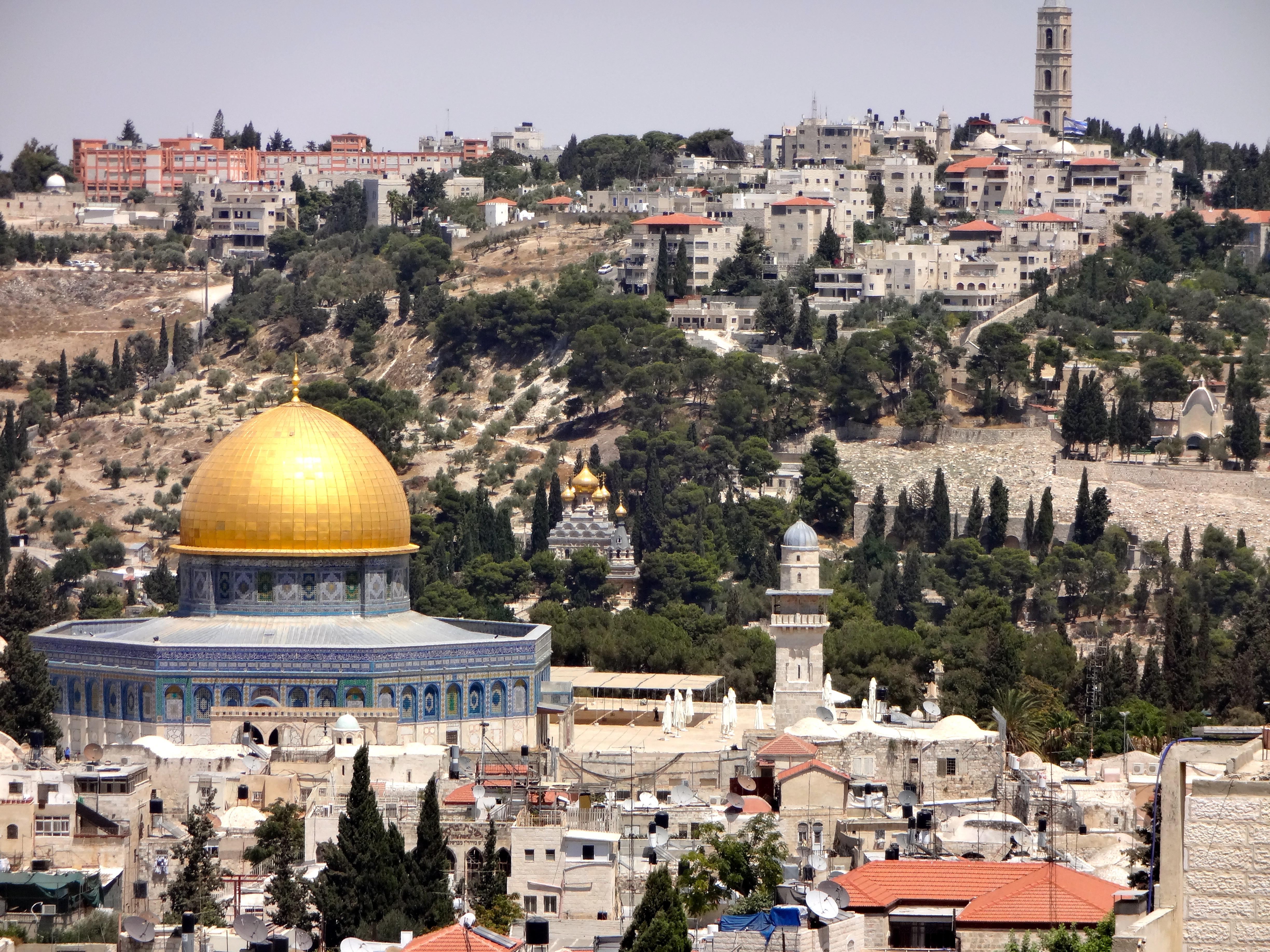
They went to a place called Gethsemane, and Jesus said to his disciples, “Sit here while I pray.” He took Peter, James and John along with him, and he began to be deeply distressed and troubled. “My soul is overwhelmed with sorrow to the point of death,” Jesus said to them. “Stay here and keep watch.” Mark 14:32-33
The church in the background with the golden onion domes is the Church of Saint Mary Magdalene in the Garden of Gethsemane. It was here that Judas lead the chief priests who came to arrest Jesus. Why did they want to arrest Jesus? Read below…
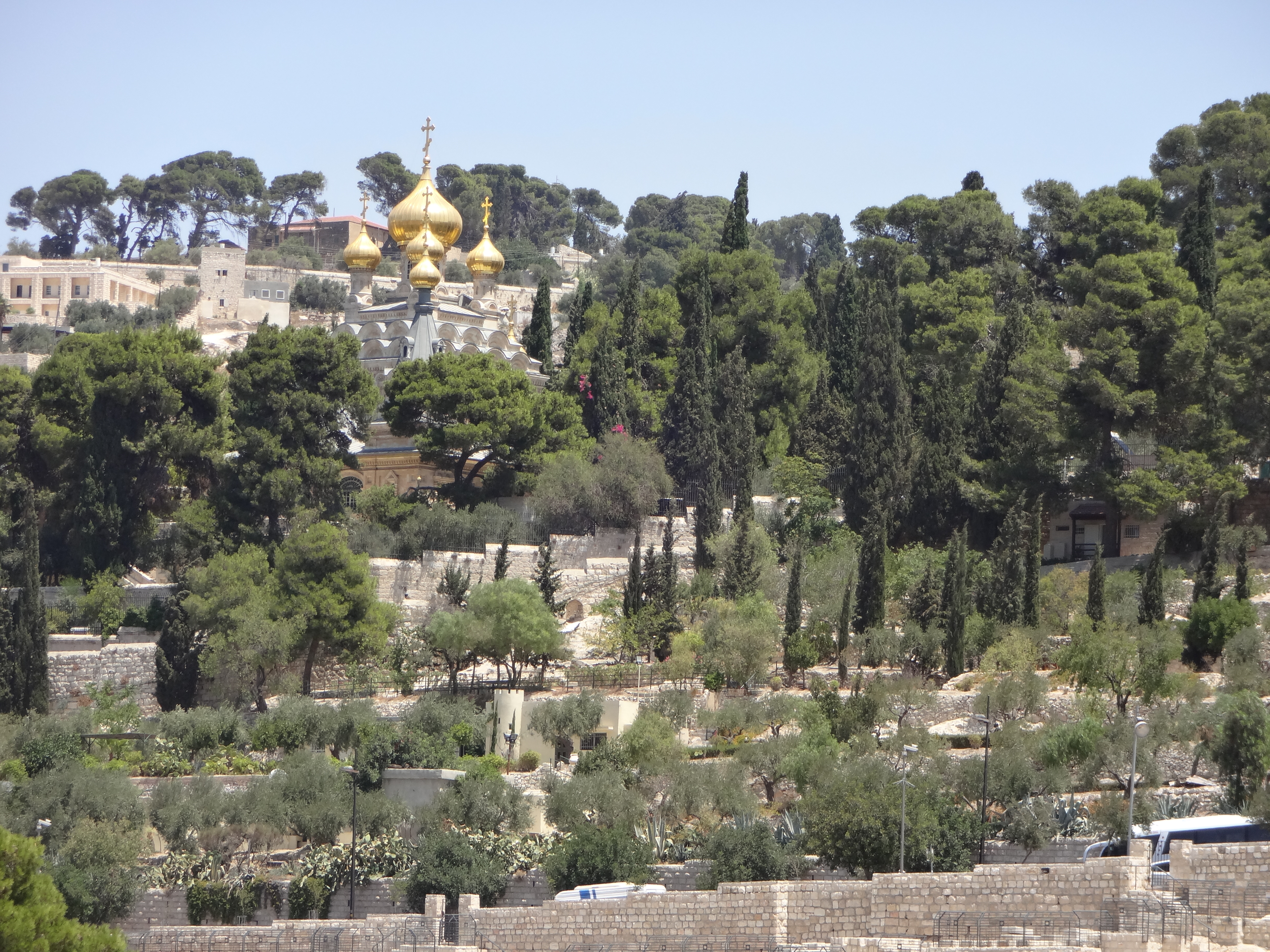
For this reason they tried all the more to kill him; not only was he breaking the Sabbath, but he was even calling God his own Father, making himself equal with God. John 5:18
The photo below was taken on the steps of where we spent the night at a place called The House of Prayer on the Mount of Olives. Behind my boys is the city of Jerusalem. Jesus would have had a similar view when he was arrested…except not so many lights:)

Just as he was speaking, Judas, one of the Twelve, appeared. With him was a crowd armed with swords and clubs, sent from the chief priests, the teachers of the law, and the elders.The men seized Jesus and arrested him. “Am I leading a rebellion,” said Jesus, “that you have come out with swords and clubs to capture me? Every day I was with you, teaching in the temple courts, and you did not arrest me. But the Scriptures must be fulfilled.” Then everyone deserted him and fled. Mark 14: 43, 46, 48-50
2. Caiaphas’ House
The Church of St. Peter in Gallicantu is built on the slope of Mt. Zion. For centuries, this location was believed to be the site of the palace of the high priest Caiaphas. If it is indeed the site, this would be where Peter denied Jesus three times before the rooster crowed, as prophesied by Jesus. “Gallicantu” means “rooster crows” in Latin.
This is one of two sites that are identified as possible locations for the palace of Caiaphas. Recent excavation on this site uncovered large meeting rooms, which may have been where the Sanhedrin met.
In the photo below you can see the Dome of the Rock, located on the Temple Mount.
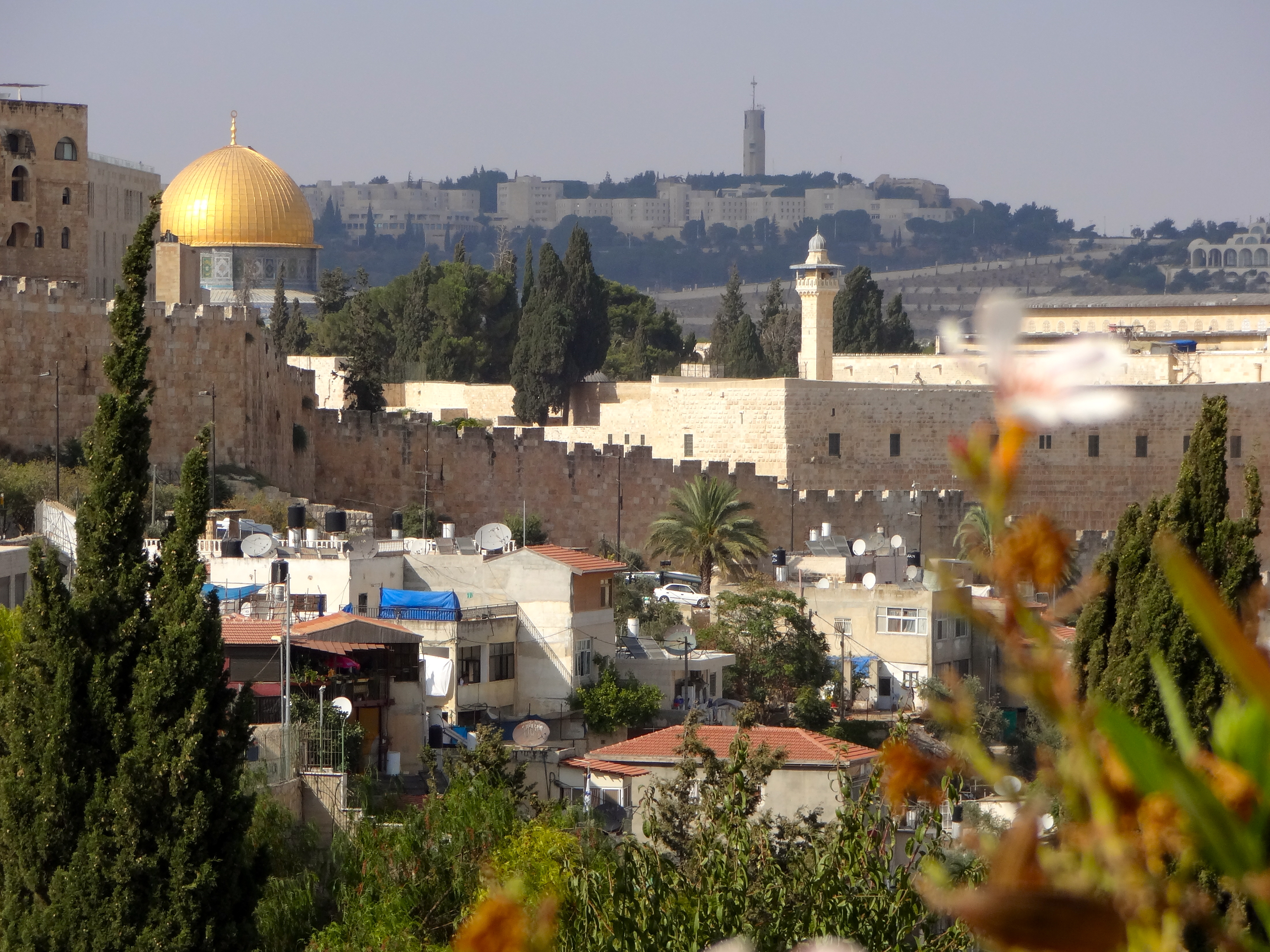
Those who had arrested Jesus took him to Caiaphas the high priest, where the teachers of the law and the elders had assembled. Matthew 26:57
Whether or not this is the actual site, the location struck us because from it you can see the Passion of Jesus unfold. In the photo below you can see the walls of Jerusalem, inside which Jesus celebrated the Last Supper (Passover) with his disciples. Jesus then left Jerusalem from one of the gates with his disciples.
To the right of the walls you can see the Garden of Gethsemane on the Mount of Olives where Jesus went to pray, and where he was arrested. You can barely see the onion-domed church of St. Mary Magdelene, situated in the Garden of Gethsemane.
After his arrest, Jesus was taken to the high priest and the Council for questioning at Caiaphas’ house.

The chief priests and the whole Sanhedrin were looking for evidence against Jesus so that they could put him to death, but they did not find any. Mark 14:55
Below is a photo of the Church of St. Peter in Gallicantu. It is built over a dungeon, where some believe Jesus was imprisoned after he was beaten and mocked by the Council.

Again the high priest asked him, “Are you the Messiah, the Son of the Blessed One?”
“I am,” said Jesus. “And you will see the Son of Man sitting at the right hand of the Mighty One and coming on the clouds of heaven.”
The high priest tore his clothes. “Why do we need any more witnesses?” he asked. “You have heard the blasphemy. What do you think?”
They all condemned him as worthy of death. Mark 14: 61-64
After questioning Jesus, the high priest and the Council became furious with Jesus because he claimed to be the Messiah and quoted an Old Testament prophecy. Someone without biblical knowledge would not have caught the meaning of Jesus’ statement. Caiaphas and the Council, however, did not miss Jesus’ meaning. Jesus had quoted a prophecy from the book of Daniel, and in doing so, claimed to be God. Claiming equality with God was the height of blasphemy, a sin worthy of death.

The Citadel at night
3. The Citadel in Jerusalem
Herod’s Palace at Jerusalem was built in the the 1st century BC by Herod the Great, King of Judea. It was the second most important building in Jerusalem, after the Temple. Herod’s palace is also possibly where the wise men came after Jesus’ birth. Nothing remains of the palace today except for the Citadel, which has been destroyed and rebuilt over the centuries.

Then the Jewish leaders took Jesus from Caiaphas to the palace of the Roman governor. John 18:28
The praertorium (governor’s residence) at the Palace was the official residence of the Roman governers when they came to Jerusalem. So, this is possibly very close to the site of Jesus’ trial by Pontius Pilate. Interestingly, after interviewing Jesus, Pontius Pilate wanted to release him.
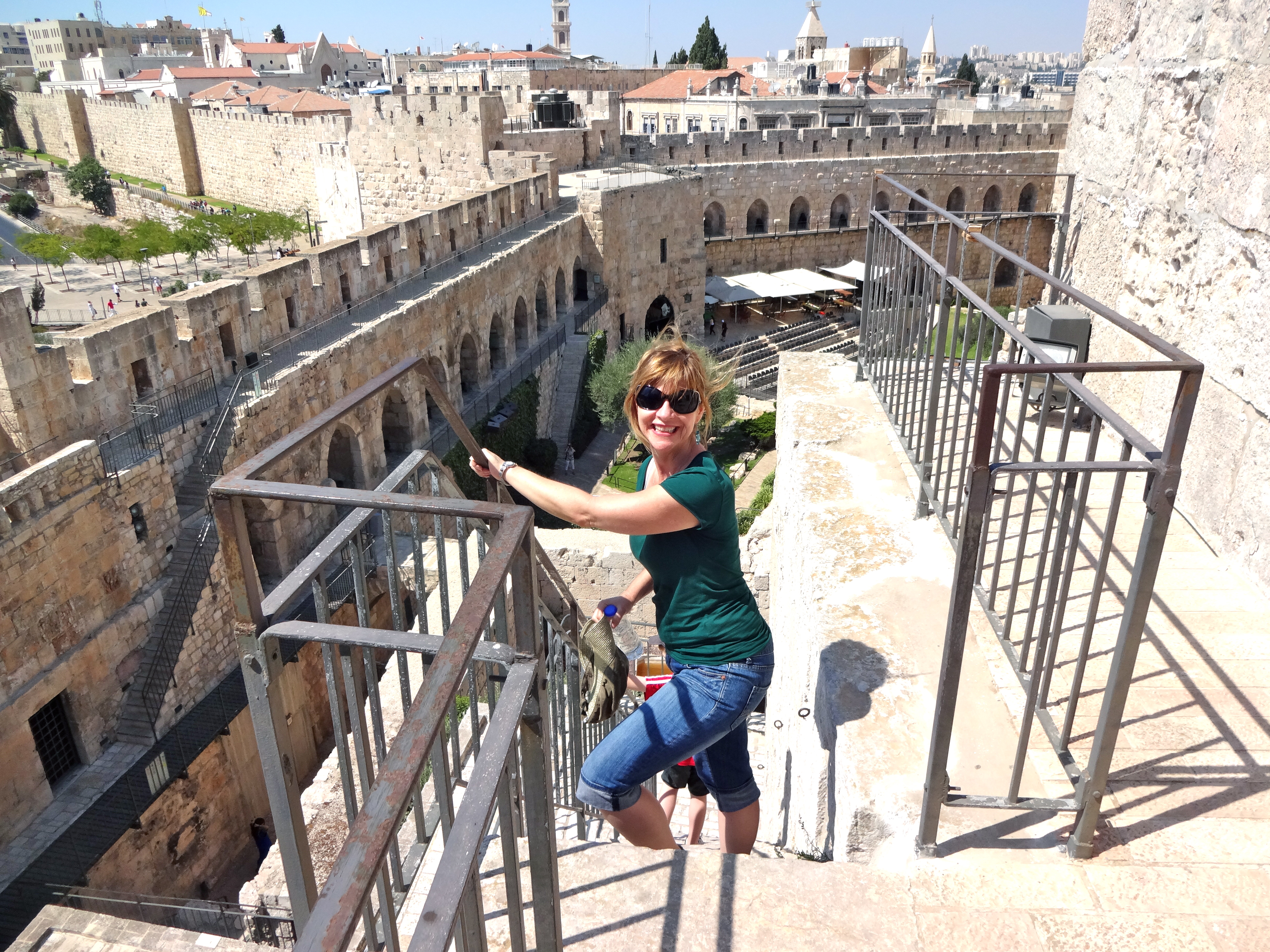
But Pilate answered, “You take him and crucify him. As for me, I find no basis for a charge against him.”
The Jewish leaders insisted, “We have a law, and according to that law he must die, because he claimed to be the Son of God.” John 19:6-7
4. The Church of the Holy Sepulchre
This is the most fascinating church I have ever seen. It is a strange mix of Byzantine, medieval, and crusader styles.
The first church was founded by Constantine the Great in 335, after he sent his mother, St. Helen, to find the site of Jesus’ crucifixion and burial.

The early Christian community of Jerusalem was said to have met together at the tomb of Jesus until 66 AD, when the city was taken by the Romans. Emperor Hadrian filled in the quarry and built a temple to Aphrodite.
Constantine removed the pagan temple. The rock-hewn tomb of Jesus was isolated and the church was built around what was believed to be the excavated hill of the Crucifixtion. According to contemporary Christian historians, the Rock of Golgotha was found during the excavation and building process.
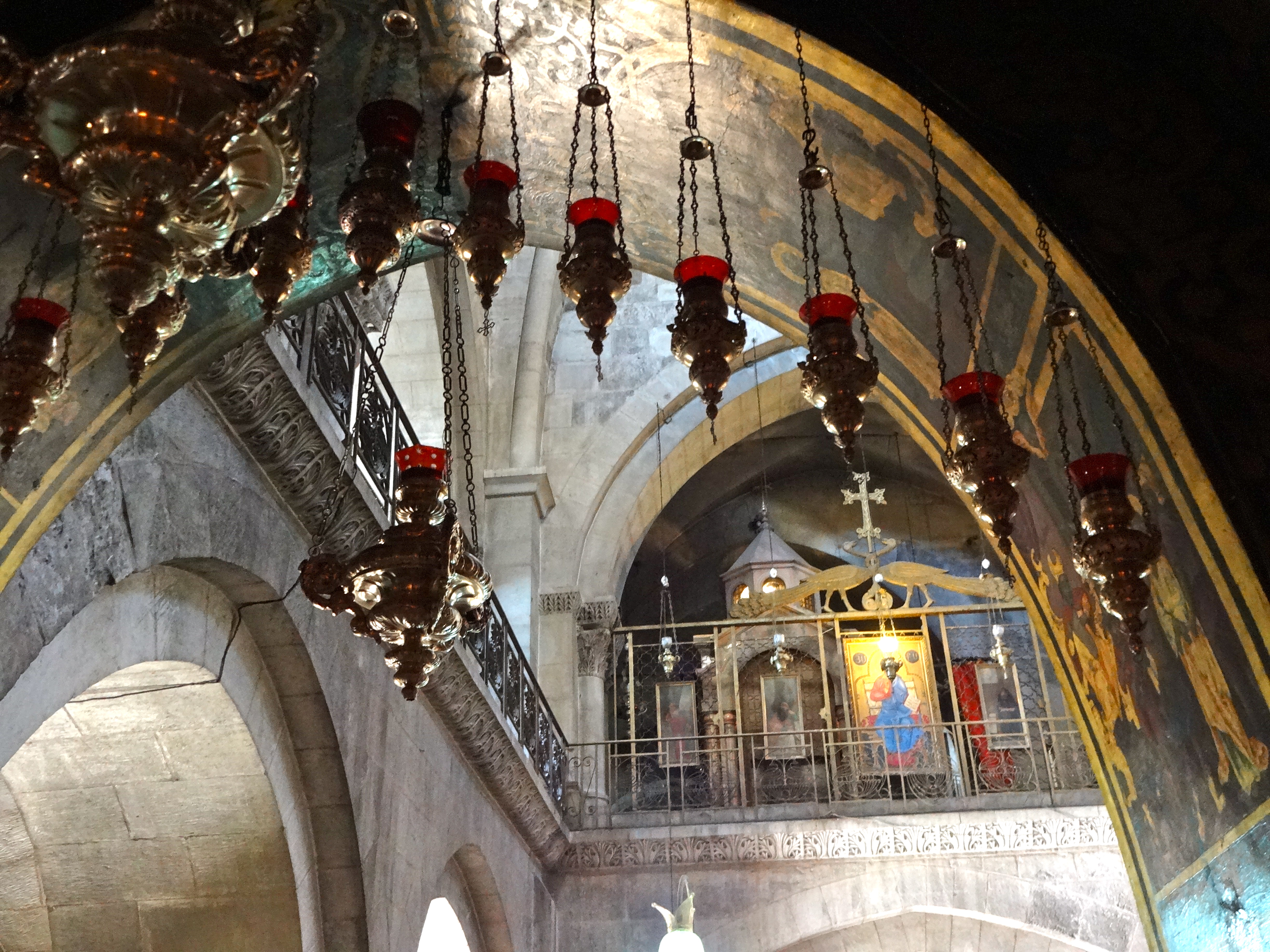
The most convincing piece of evidence that this might be the actual tomb of Jesus is that other first-century tombs are found inside the church. The burial shafts date to the time of Jesus’ death.
5. Golgotha
This site LOOKS much more like the place of the Skull, as described in biblical accounts. This area was part of an ancient stone quarry. According to local oral tradition, the quarry was the site of execution by stoning (think about it…makes sense). So, it is possible that the Romans also used the site for crucifixions.

Finally Pilate handed him over to them to be crucified, So the soldiers took charge of Jesus. Carrying his own cross, he went out to the place of the Skull (which in Aramaic is called Golgotha). There they crucified him, and with him two others, one on either side, and Jesus between them. John 19:16-18
Crucifixions usually took place next to busy roads, so that many would pass by and be deterred by the fate of the criminals or insurrectionists. It is ironic that now, in modern times, just below this site is a very busy bus station. I took the photo and cut out the bus site because I though it took away from the preciousness of the site…the place where Jesus died for the sins of all humanity. However, in retrospect, I think it’s God’s way to shout “I love you!!” to all the hundreds of people coming and going on the buses each day. I wonder if they hear Him?

But God demonstrates his own love for us in this: While we were still sinners, Christ died for us. Romans 5:8
6. The Garden Tomb
In scripture, the place where Jesus was crucified, and the place where he was buried were very close in proximity…as are Golgotha and the Garden Tomb.
The garden area is really lovely and peaceful. It has been tastefully landscaped to accommodate Christian groups who come to worship and give thanks at this site. We heard a group singing worship songs in another language, and we could recognize the tune without understanding the words. It was beautiful!!

Now in the place where He was crucified there was a garden, and in the garden a new tomb in which no one had yet been laid. So because of the Jewish day of Preparation, since the tomb was close at hand, they laid Jesus there. John 19: 41-42
The tomb was excavated in 1867. The exact dating of the tomb is disputed; however, it fits biblical description in that it is cut out of solid rock, and it was sealed by a rolling stone. You can see the channel for the stone behind Andy’s legs.

When the Sabbath was over, Mary Magdalene, Mary the mother of James, and Salome bought spices so that they might go to anoint Jesus’ body. Very early on the first day of the week, just after sunrise, they were on their way to the tomb and they asked each other, “Who will roll the stone away from the entrance of the tomb?”
But when they looked up, they saw that the stone, which was very large, had been rolled away. Mark 16:1-4
You can see in the photo above that we were given an audio guide to explain the history of the Garden Tomb and the reasons why it is believed to possibly be the site of Jesus’ death, burial and resurrection. I’m a bit skeptical when people say this is “THE” place where something happened…especially when thousands of years have gone by, and the city has been destroyed by Romans, earthquakes, invaders and crusaders. I really liked what the audio guide narrator said:
The exact LOCATION of the place of Jesus’ crucifixion and resurrection isn’t as important as WHY he died, and WHO he died for.

For God so loved the world that he gave his one and only Son, that whoever believes in him shall not perish but have eternal life. John 3:16
The Jews have been persecuted by ignorant Christians throughout the centuries since Jesus’ death for being “Christ killers”. Their reasoning is ridiculous, because Jesus was Jewish, as were the disciples and the early Christian church. The persecutors of the Jews didn’t get it…that Jesus’ death wasn’t a mistake…it was part of God’s plan to reach out to a lost world, to bring people back to a relationship with Him. In fact, Jesus predicted his own death.
![“Now my soul is troubled, and what shall I say? ‘Father, save me from this hour’? No, it was for this very reason I came to this hour. ..And I, when I am lifted up[g] from the earth, will draw all people to myself.” 33 He said this to show the kind of death he was going to die. John 12:27, 32-33](https://globalnomadfamily.com/wp-content/uploads/2013/09/dsc043701.jpg)
“Now my soul is troubled, and what shall I say? ‘Father, save me from this hour’? No, it was for this very reason I came to this hour. …And I, when I am lifted up from the earth, will draw all people to myself.” He said this to show the kind of death he was going to die. John 12:27, 32-33

But the angel said to the women, “Do not be afraid, for I know that you seek Jesus who was crucified. He is not here, for He has risen, as He said. Come, see the place where He lay.” Matthew 28: 5-6
7. The Western Wall
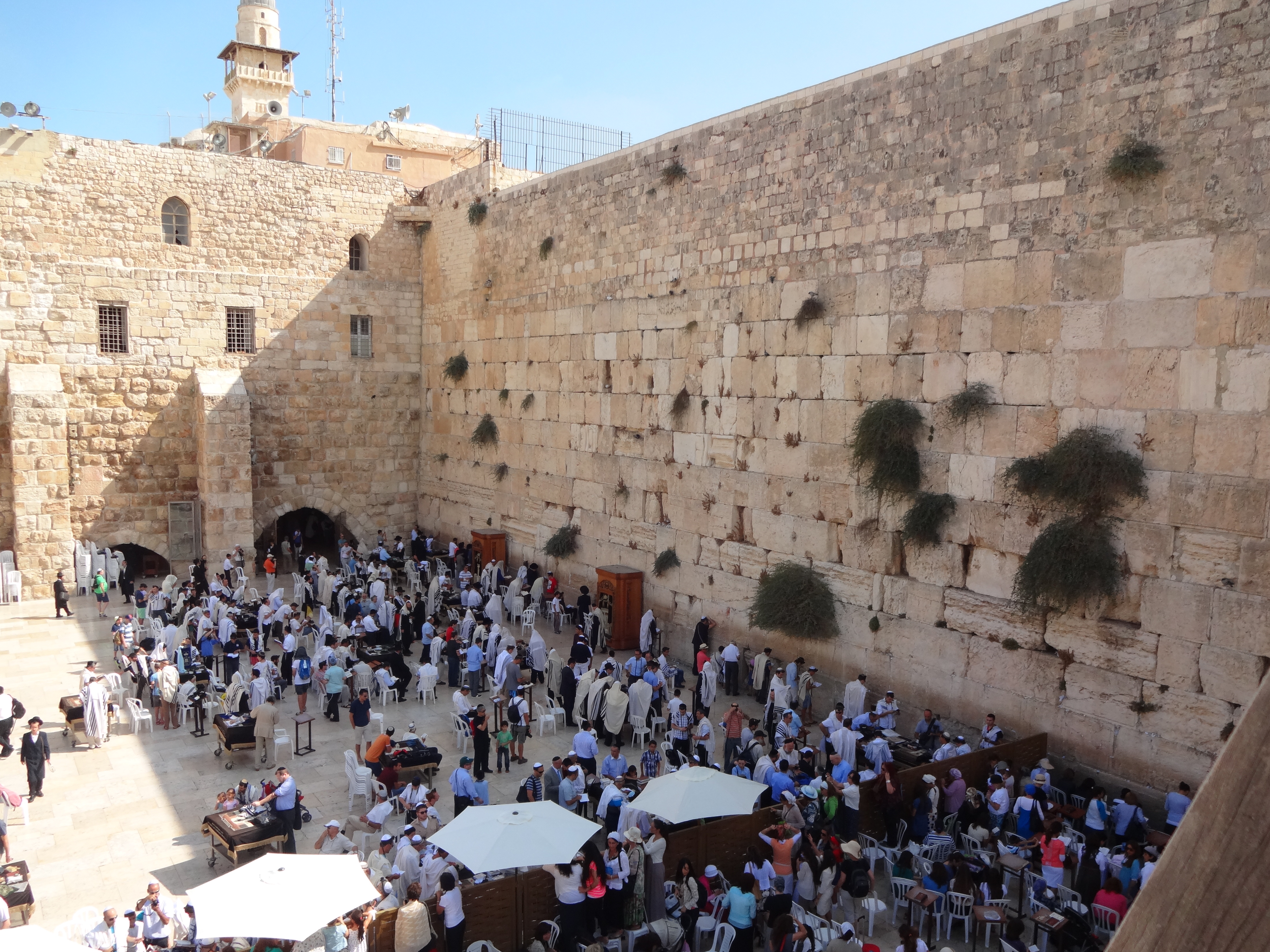
The Temple was destroyed by the Romans in 70 AD. The Western Wall is a remnant of the ancient wall that surrounded the courtyard of the Temple. It is one of the most sacred sites for the Jewish faith. The Jews pray at the Western Wall because it is the side of the Temple Mount which is closest to the location of the Holy of Holies: the inner chamber where the ark of the covenant was kept. Jesus often taught at the Temple, as did his disciples, following Jesus’ resurrection.
The controversy over Jesus’ claims to be God did not end with his death and resurrection. Peter and John healed a lame man begging for alms at the gate of the temple. This attracted a big crowd, so Peter began to boldly tell the crowd that it was the power of Jesus who healed the man, and how Jesus fulfilled Old Testament prophecies about the Messiah.
Not surprisingly, this annoyed the Jewish leaders, who had Peter and John arrested. The next day they were brought before Caiaphas (a little deja-vu, perhaps?) Peter had the audacity to tell Caiaphas and the leaders that Jesus’ was the Christ!
“ If we are being called to account today for an act of kindness shown to a man who was lame and are being asked how he was healed, then know this, you and all the people of Israel: It is by the name of Jesus Christ of Nazareth, whom you crucified but whom God raised from the dead, that this man stands before you healed. Jesus is “the stone you builders rejected,
which has become the cornerstone.’ Salvation is found in no one else, for there is no other name under heaven given to mankind by which we must be saved.” Acts 4: 9-12
Many who are of other faiths or of no faith have respect for Jesus. Some believe that Jesus was a great teacher, but don’t believe he was God. They believe he was a great human being. Some even revere Jesus as a great prophet.
C.S. Lewis argued against the view that Jesus was a great teacher in his book Mere Christianity. He argued that Jesus made astonishing claims about himself, such as having the authority to forgive sins and to be the only way for people to attain salvation.

When they saw the courage of Peter and John and realized that they were unschooled, ordinary men, they were astonished and they took note that these men had been with Jesus. But since they could see the man who had been healed standing there with them, there was nothing they could say. Acts 4:13-14
Lewis argued that since Jesus made these claims about himself, there are three ways to look at Jesus:
First, that Jesus’ claims were false and he knew it. That would make him a liar…ouch! If he knew his claims were false, then he was purposefully deceiving people. If that is the case, there goes the idea that Jesus was a great teacher.
The second possibility, according to Lewis, is that if Jesus’ claims about himself were false, and he didn’t know it…then he was a lunatic! These days, if someone claims to be God himself, we lock him or her up in a loony bin!
The third possibility, wrote Lewis, is that Jesus’ claims to be God are true. Earlier in his ministry, Jesus’ friend Lazarus died. Jesus raised Lazarus from the dead, and this is his conversation with Lazarus’ sister, Martha, just before he performed the miracle:

Jesus said to her, “I am the resurrection and the life. The one who believes in me will live, even though they die; and whoever lives by believing in me will never die. Do you believe this?”
“Yes, Lord,” she replied, “I believe that you are the Messiah, the Son of God, who is to come into the world.” John 11:25-27
Everyone decides for themselves what they think about Jesus’ claims…liar, lunatic or Lord?
What do you think??

San Zeno Basilica
We just got back from our trip to Israel last night…it was an amazing trip. We saw and did so much! I didn’t have a chance yet to go through photos or keep up the blog. I learned from my failed attempt to do a post a day for our European road trip that keeping up while traveling isn’t realistic. So stay tuned for future posts on Italy, France and Israel!
This post is about the Basilica of San Zeno: a must see if you are in Verona. We went to find San Zeno Basilica at the recommendation of our Italian host.

It was founded in the 5th century to house the remains of San Zeno, Verona’s patron saint.
There were hardly any tourists here; we almost had the place to ourselves! It’s a lovely, peaceful church. St. Zeno is Verona’s patron saint because he was credited with converting the people of Verona to Christianity.
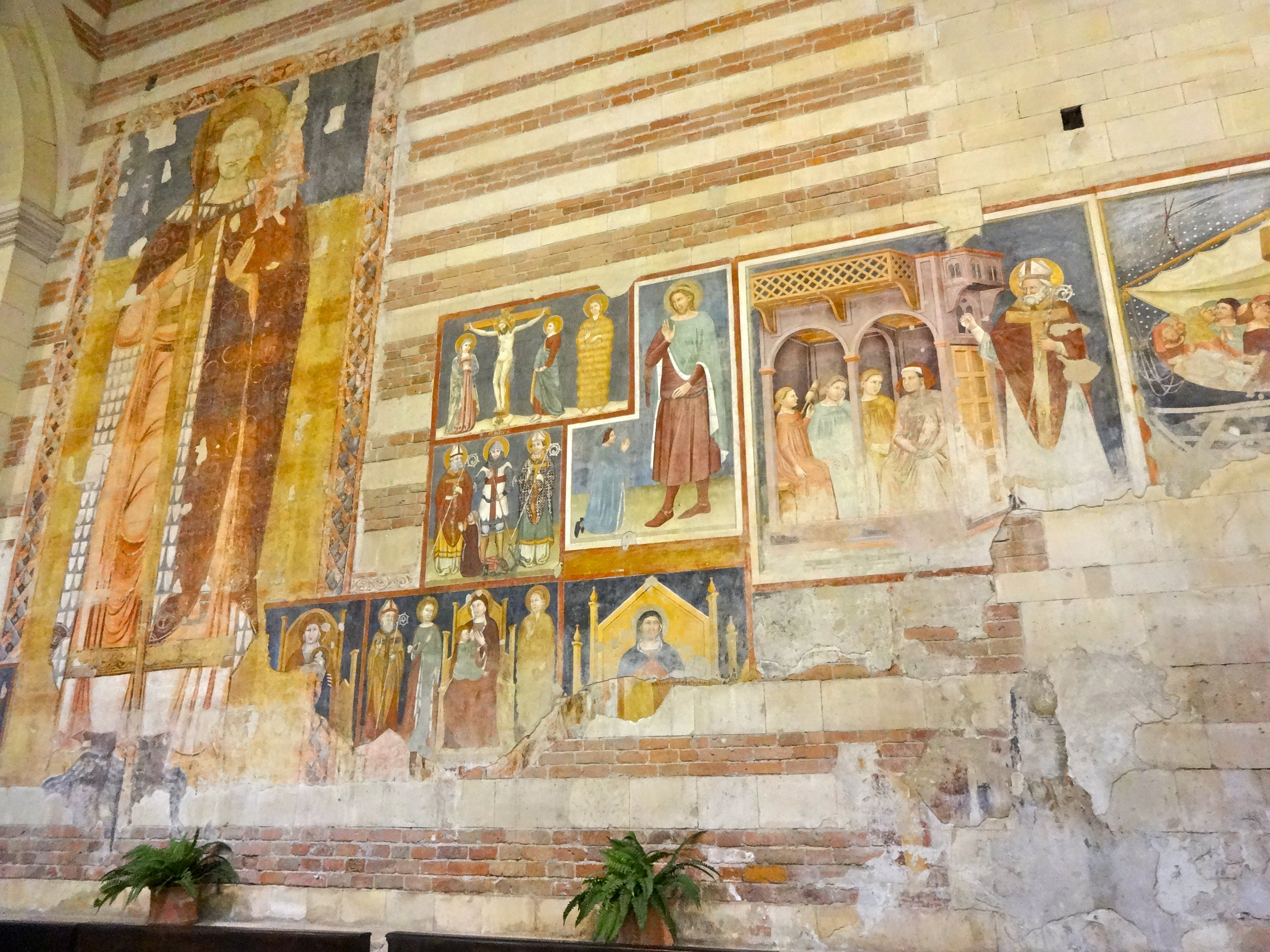
San Zeno was born in North Africa.
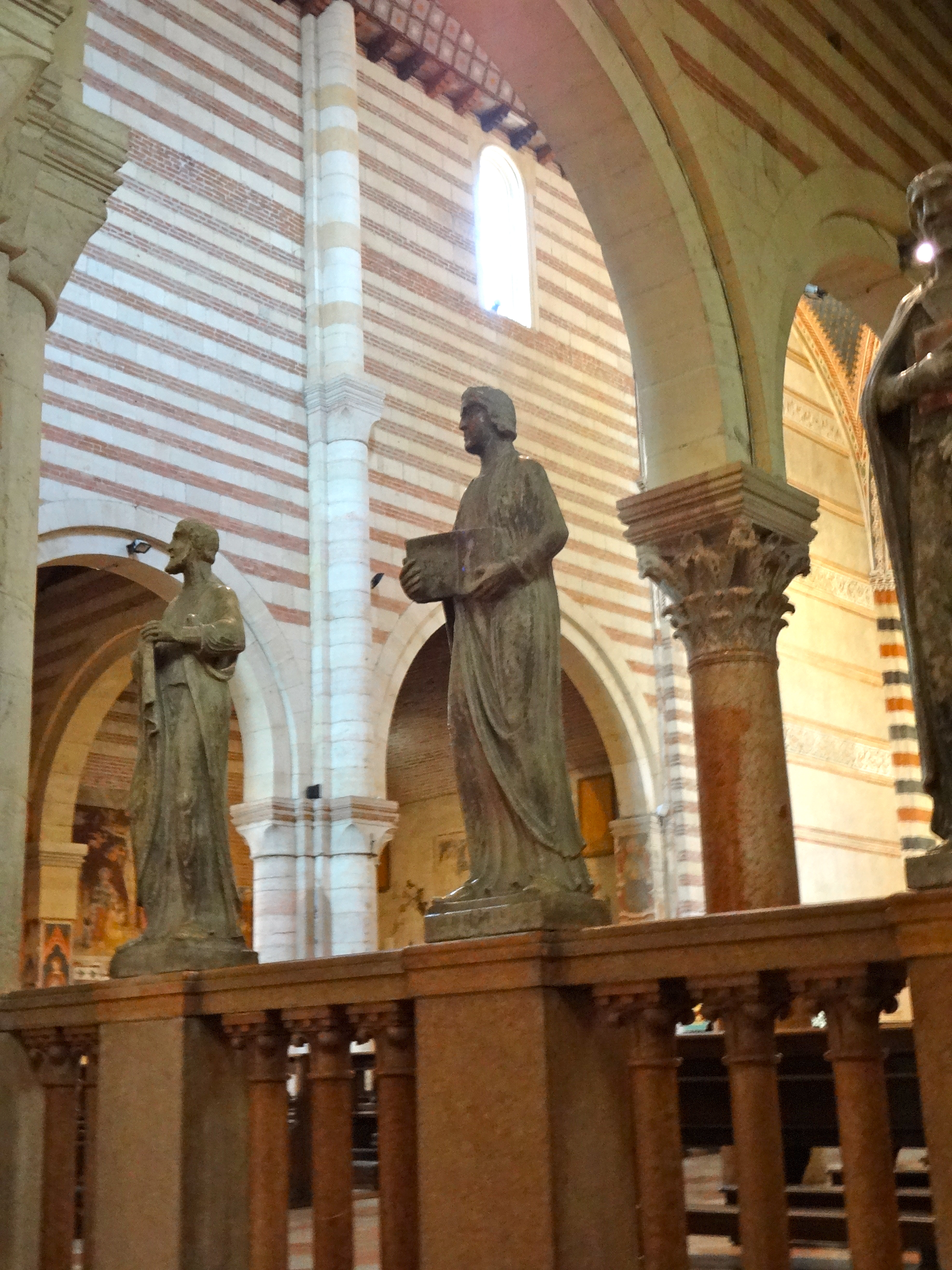
Many of San Zeno’s sermons survive today.

Baptismal font: it’s more than 1000 years old!
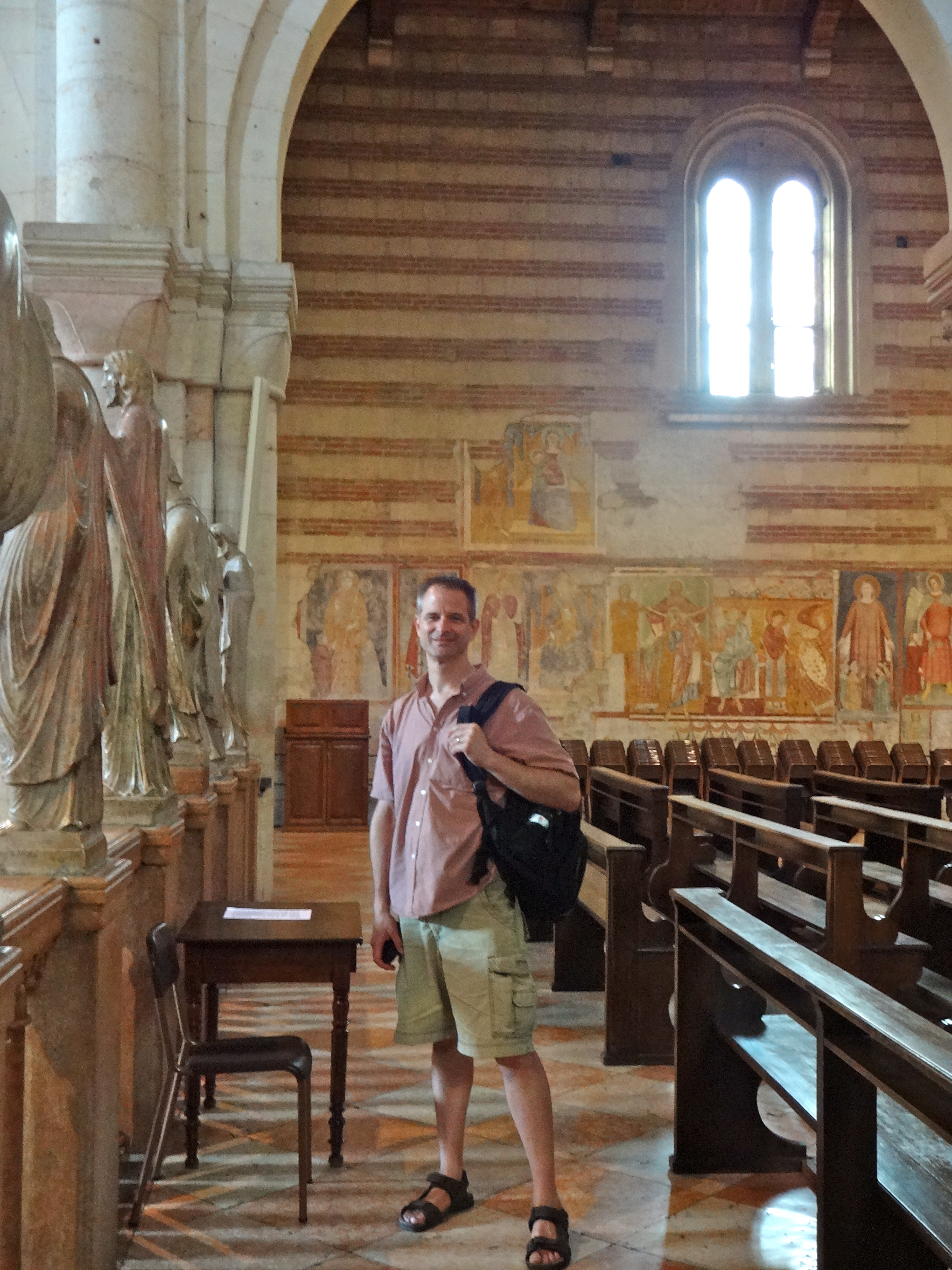
The church was rebuilt a few centuries later and was consecrated in 806 AD

The church was later destroyed by Hungarian invaders! Rebuilding began again in 963 AD.

What you see in the photos dates from the more recent reconstruction in the 12th and 13th centuries!

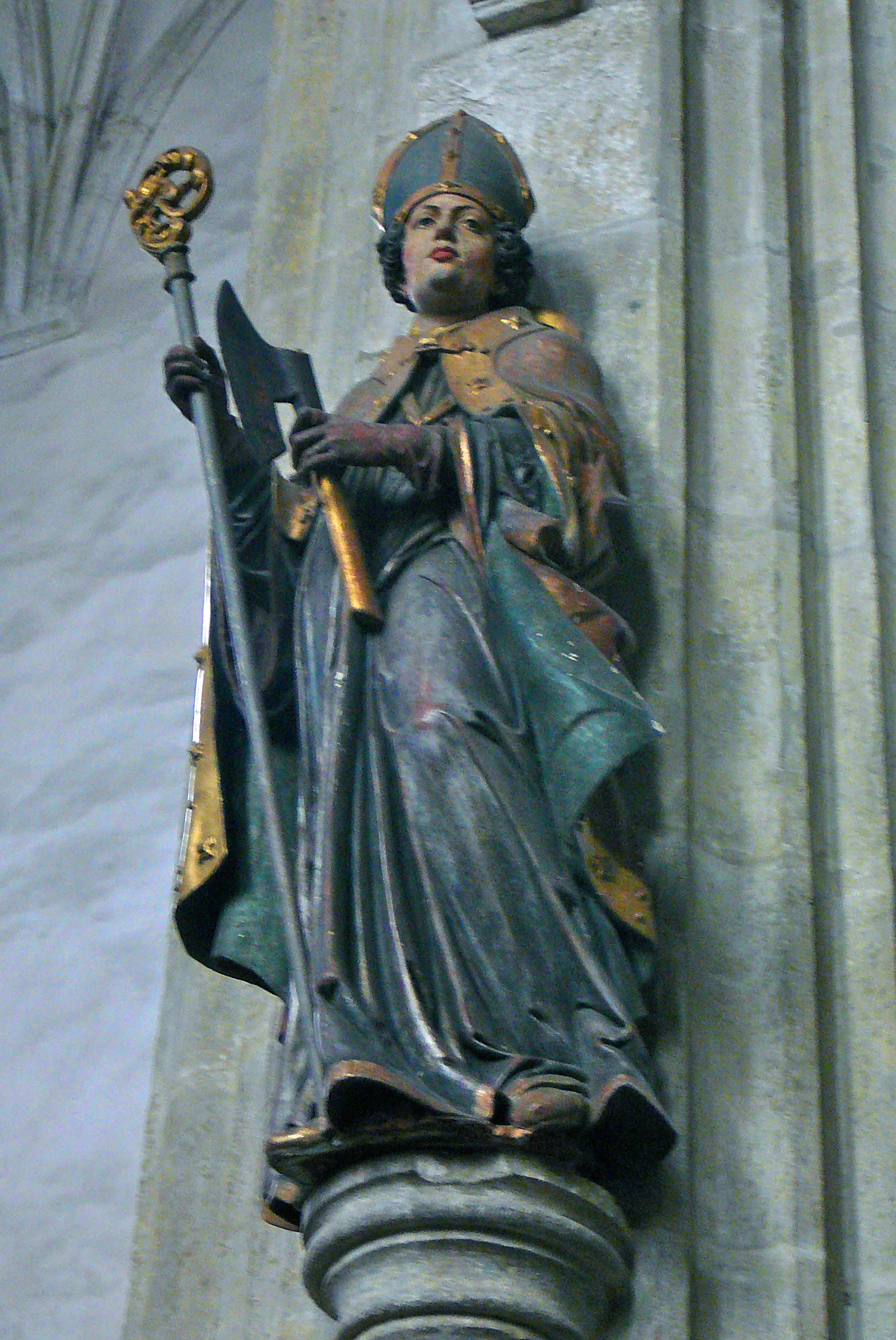
Statue of San Zeno.

The crypt dates back to the 10th century and contains a sarcophagus with the remains of St. Zeno.

According to tradition, this crypt was where Shakespeare’s Romeo and Juliet were married!
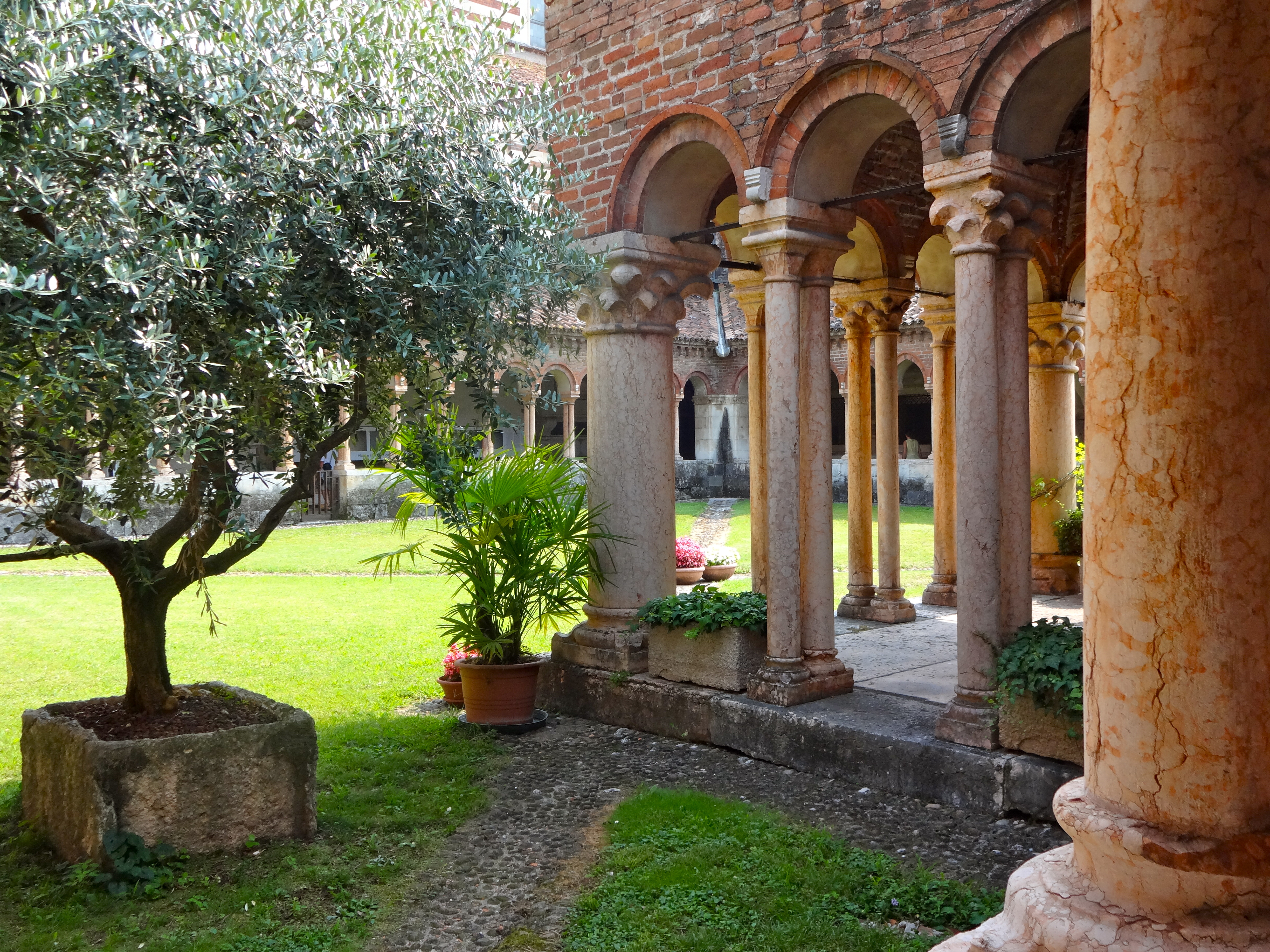
San Zeno died in 380, but he is still honored and remembered here.
Our Italian host also gave us the tip that Verona’s best ice cream could be found next to the basilica of San Zeno, so of course we had to try it!
Verona was a wonderful surprise for us…we had no idea what a fascinating city it is before we spent a week there. You can read more about our stay in Verona here:
Verona is also a great city to use as a base for exploring other amazing cities. We did a day trip to Venice (stay tuned for that post). We also visited Lake Garda and Vicenza. You can see the photos here:
So, for anyone visiting northern Italy, don’t forget lovely Verona!

The end of our first day!
We arrived in Israel with our friends and their family at 3:15am. I think Nate was the only one who got a semi decent night’s sleep. So we picked up our rental cars, drove to the home we are staying at, and crashed for several hours.
We woke up, had a late lunch, and headed off to the beach… just a five minute drive away. We were shown the way to this particular beach by the house sitter of the people whose home we are staying in. There was hardly anyone there!
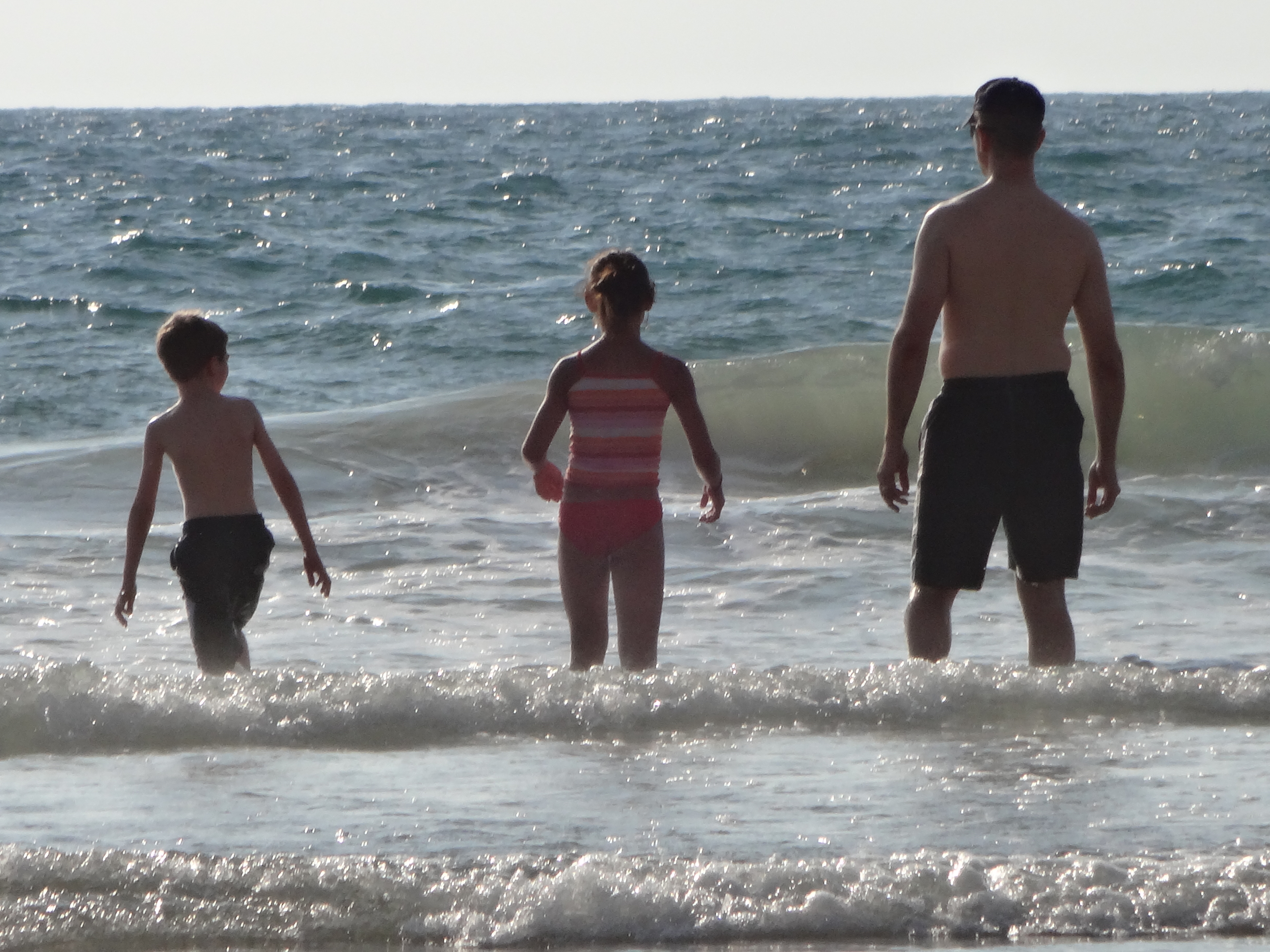
The water was about 75 degrees Farenheit!

This kid LOVES the water!

So does this BIG kid…he’s doing the Gangnam style dance out there! Bet you didn’t know that Andy can dance on water!
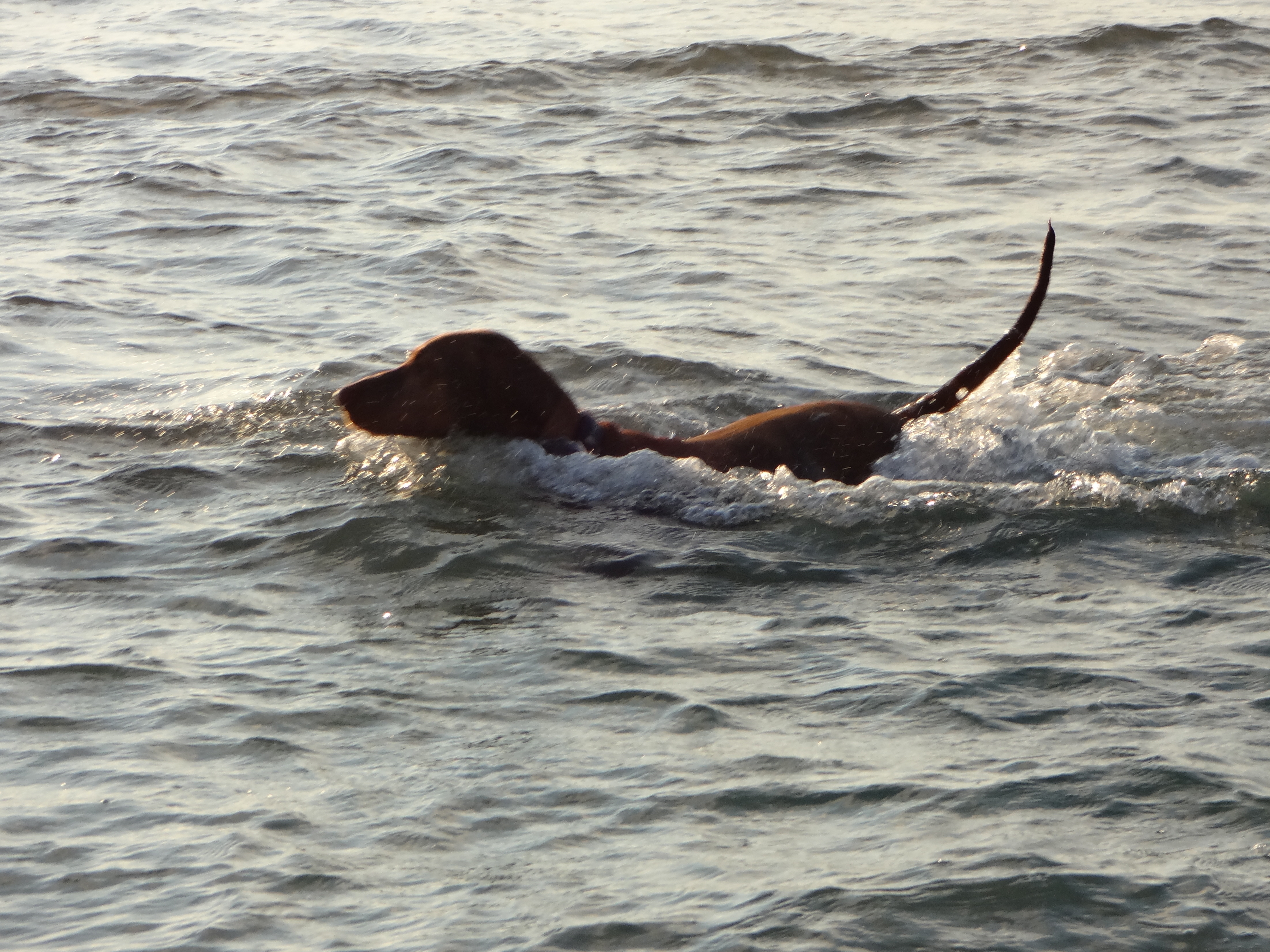
This pooch was thoroughly enjoying the water as well and swam with us the whole time we were there.
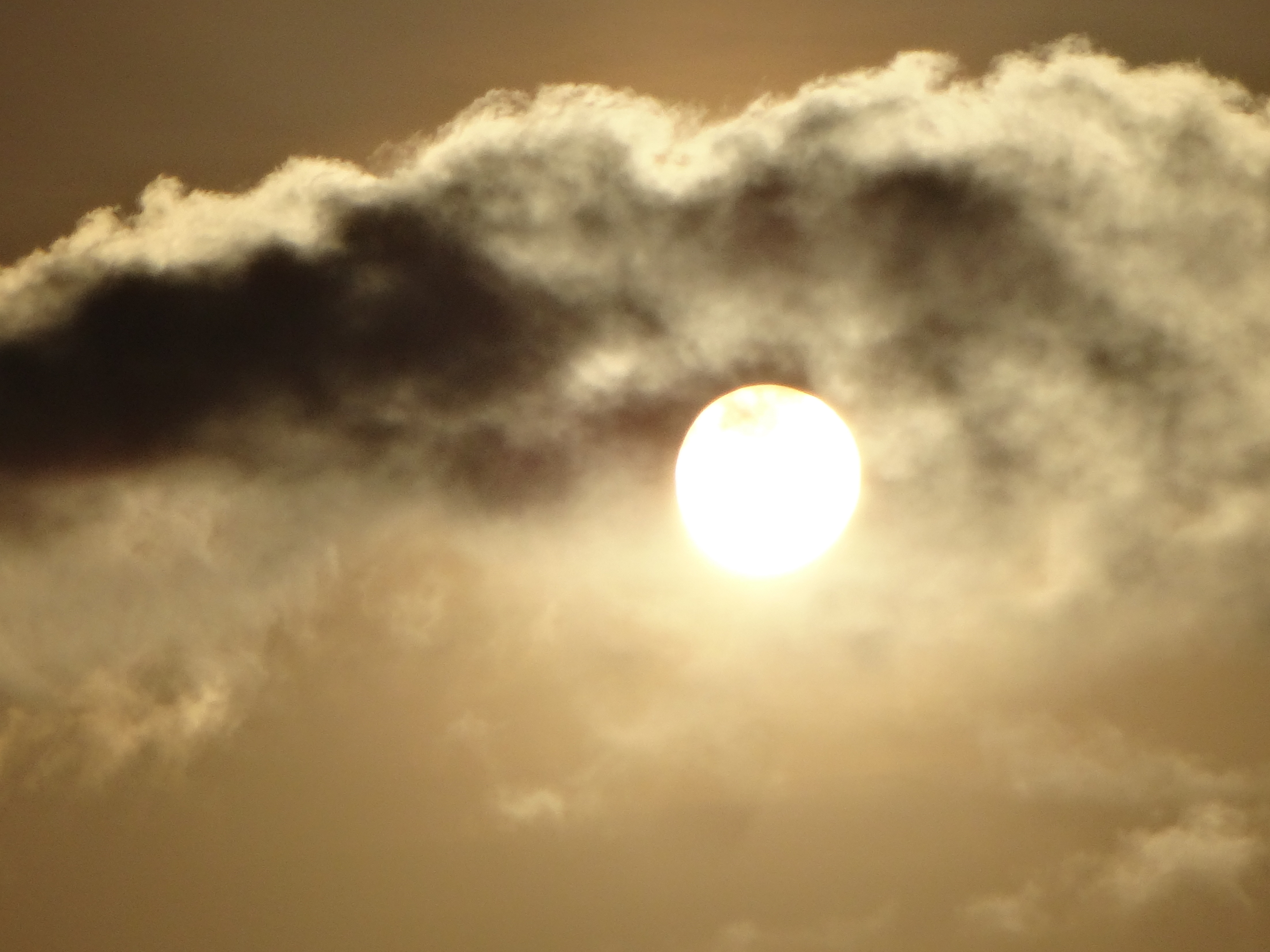
The sun started making its way down…
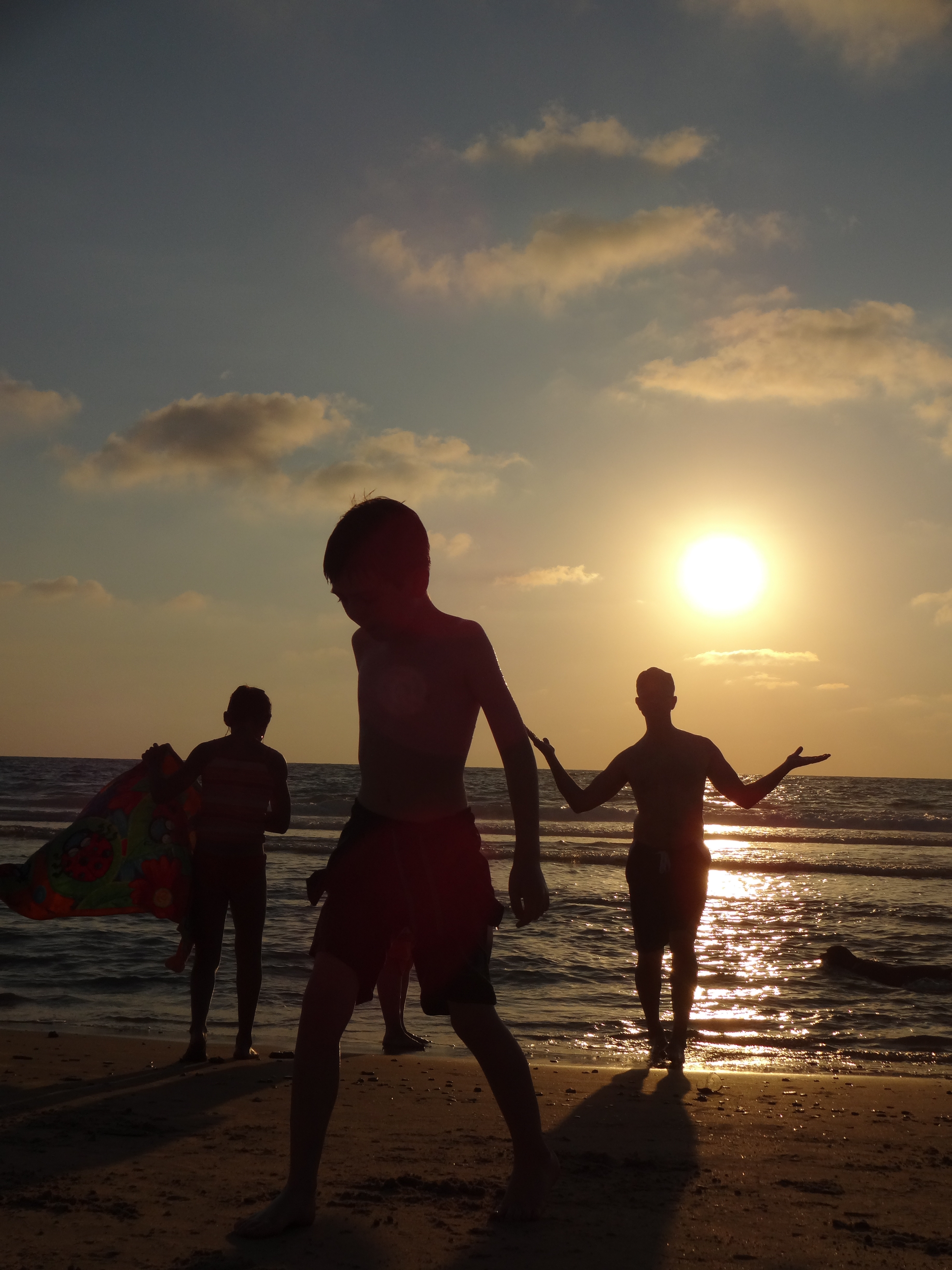
Time to get out and dry off…

Praise God, we are in the Holy Land!

I got the whole group to pose like this, but instead of a “Praise God!” moment, it looks more like “Stop, don’t shoot!”
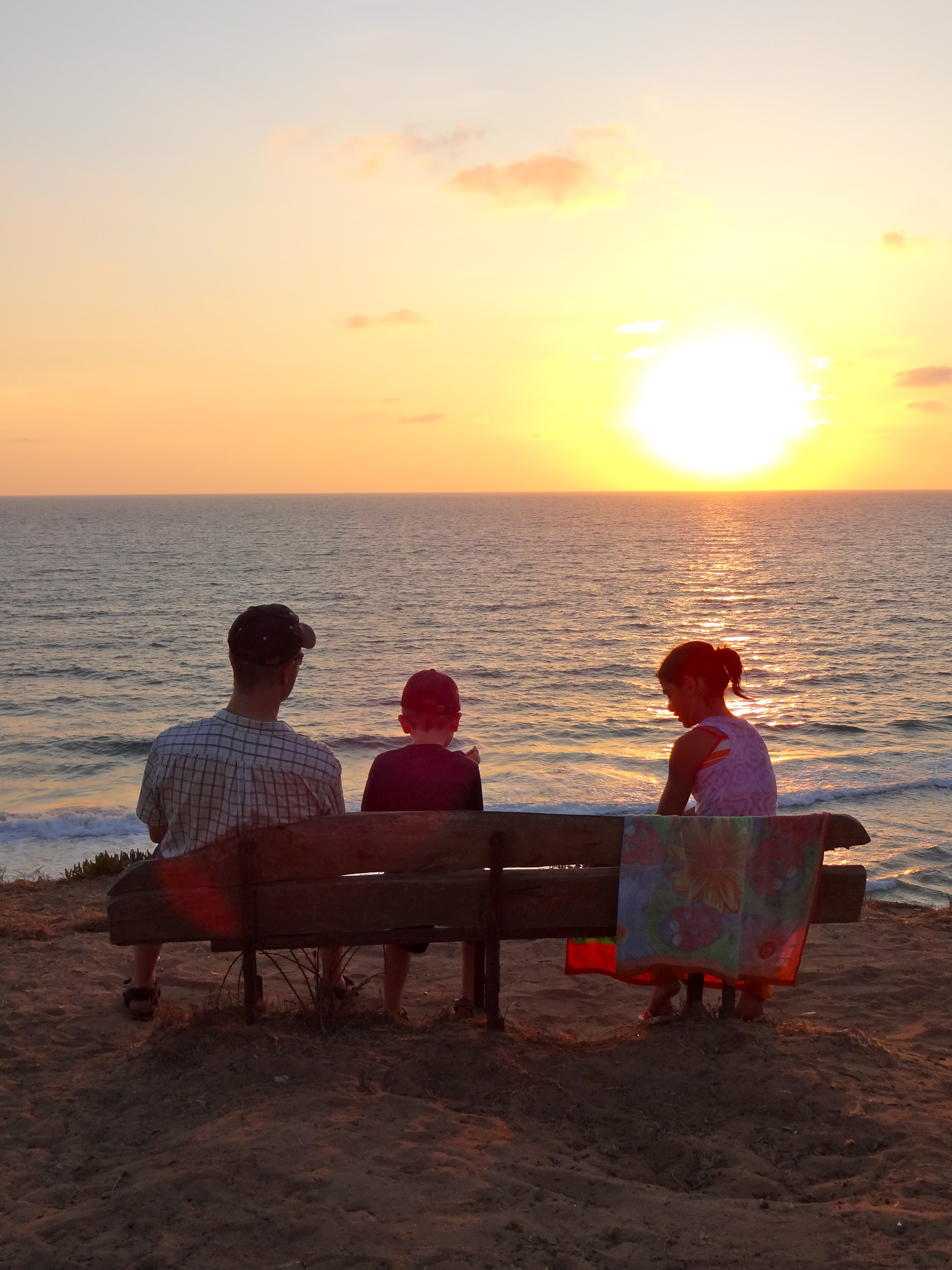
Then we watched the sun go down over the Mediterranean.

Cute kid!

It was a lovely secluded beach.
I think I must have touched the camera lense with a wet finger, because there’s a red circle on some of the photos, but they are still amazing shots to capture the lovely sunset.

Going…

Going….

Gone!
It was a wonderful end to our first day in the Holy Land! Many more great days have followed since then. We’ve been to the Sea of Galilee, Nazareth, as well as three days in Jerusalem. It’s amazing to see the city of David, to see where Jesus walked and taught, and to experience the sights and sounds of this fascinating country!

Kutna Hora: view of St. Barbara’s Cathedral!
We are briefly back in Prague before leaving on our next set of adventures! This post is especially for future guests arriving soon. Kutná Hora is a lovely day trip from Prague.
If you saw my post on the Bone Church in Kutná Hora, you may be intrigued enough to see it for yourself. However, even if you think the Bone Church isn’t “your cup of tea” you should still go see Kutná Hora. The historical town center and St. Barbara’s Cathedral is a UNESCO world heritage site.
Kutná Hora has not one, but several stunning cathedrals, which more than make up for the gruesome Bone Church!

Cathedral of Assumption of Our Lady and John the Baptist.
The town began in 1142 with the settlement of Sedlec Monastery, the first Cistercian monastery in Bohemia.
German miners began to mine for silver in the mountain region in 1260, which the miners named Kuttenberg. The mountain was part of the monastery property.

These are the relics of St. Felix, donated by Pope Benedict X!V in 1742 on the occasion of the monastery’s 600th anniversary!
Kutná Hora’s wealth was built on mining. There’s a legend that goes like this: when a lazy monk named Anton woke up from a nap in the monastery orchard, he found three pieces of silver sticking out from the ground near his face. Anton laid down his robe (‘Kutna’, in Czech) to mark the place. Anton’s fellow monks investigated further and discovered what was to become the silver mines. Kutná Hora would later become the richest silver mine in the Kingdom of Bohemia.

It was wonderful to wander the streets and see the fine architecture.
The prosperity of Kutná Hora silver mines reached its climax in the 14th and 15th centuries when the city became one of the richest places in Europe. It was one of the most important political and economic centers of Bohemia at that time, second only to Prague.

My husband will confirm that I have a weakness for taking photos of cute window boxes:)
Unfortunately, we arrived too late in the day to take a tour of the silver mines. I’ve heard that the tour is very interesting, so we will definitely go back!

St. James’ Church
St. James’ Church is one of Kutná Hora’s famous landmarks. Construction of St. James began in 1330, and was completed in 1420.
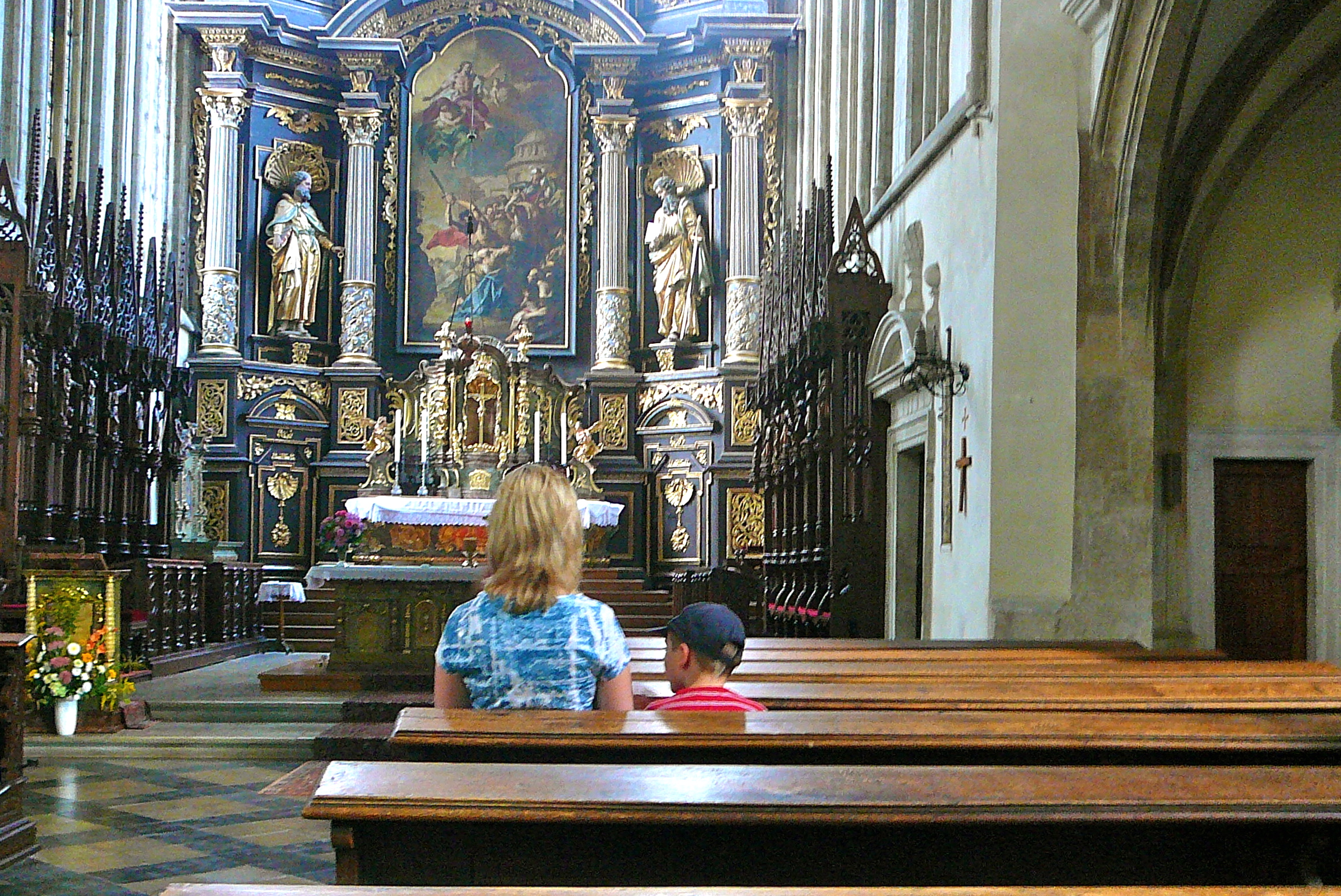
Inside the Church of St. James, built in the 14th century.
Pope Martin VI declared a crusade against the Hussites in 1419, shortly before construction of St. James was completed. The Hussites were followers of Jan Hus, a Czech priest who was considered the first Church reformer because he lived before Luther and Calvin.
St. James was the principal parish church of medieval Kutna Hora.
In 1420 Emperor Sigismund used Kutna Hora as the base for his unsuccessful attack on the Taborites (considered heretics by the Catholic Church) during the Hussite Wars…leading to the Battle of Kutna Hora. In that battle, the Taborites were encircled by the superior forces of Sigusmund; however, under the leadership of famous Czech general Jan Zizka they were able to break through the lines and escape.

Thanks, Elsa, for these photographs!
According to Wikipedia, Jan Zizka is considered to be among the greatest military leaders and innovators of all time. He is one of six commanders in history who never lost a battle . There is an enormous statue of him in Prague, which can be seen from miles away. The surrounding area is called Zizkov!

On the way to St. Barbara’s Cathedral.
St. Barbara’s Cathedral was founded in the late 1300s by the rich mine owners of Kutná Hora. They were trying to compete with the grandeur of Prague’s St. Vitus Cathedral. Building plans were interrupted by the Hussite battles, so construction didn’t resume until 1482.

The stained glass windows are stunning!
Kutna Hora passed to the Habsburg Monarchy of Austria in 1526. Things went downhill after that…the mines were flooded, insurrection against the Holy Roman Emperor brought harsh punishment, followed by plague and the Thirty Years War. The city was devastated by fire in 1770. The mines were abandoned not long after.

The view from the balcony.
Kutna Hora remained part of the Austrian Empire under the Hapsburgs during the 1800’s. It became part of Czechoslovakia after World War I, following the collapse of the Austro-Hungarian Empire.

The fun angels on top of the organ!
For more information about Kutna Hora, including how to get there from Prague, look here:
http://www.outsideprague.com/kutna_hora/kutna_hora_daytrip.html
http://www.myczechrepublic.com/kutna-hora/getting-there.html
So, if you are in Prague for more than a few days, definitely make a trip to Kutna Hora…you won’t regret it!

Verona’s “claim to fame” for attracting tourists is being the setting of Shakespeare’s Romeo and Juliet. Now that I’ve experienced Verona for myself, I find it tragic that most tourists “do” Verona in a few hours, rushing in to take photos at Juliet’s balcony and then moving on to the next city!! Verona really surprised me with how incredibly beautiful the city is, and how much there is to see and do here. Before I tell you more, here are our own tacky tourist photos of Juliet’s House.
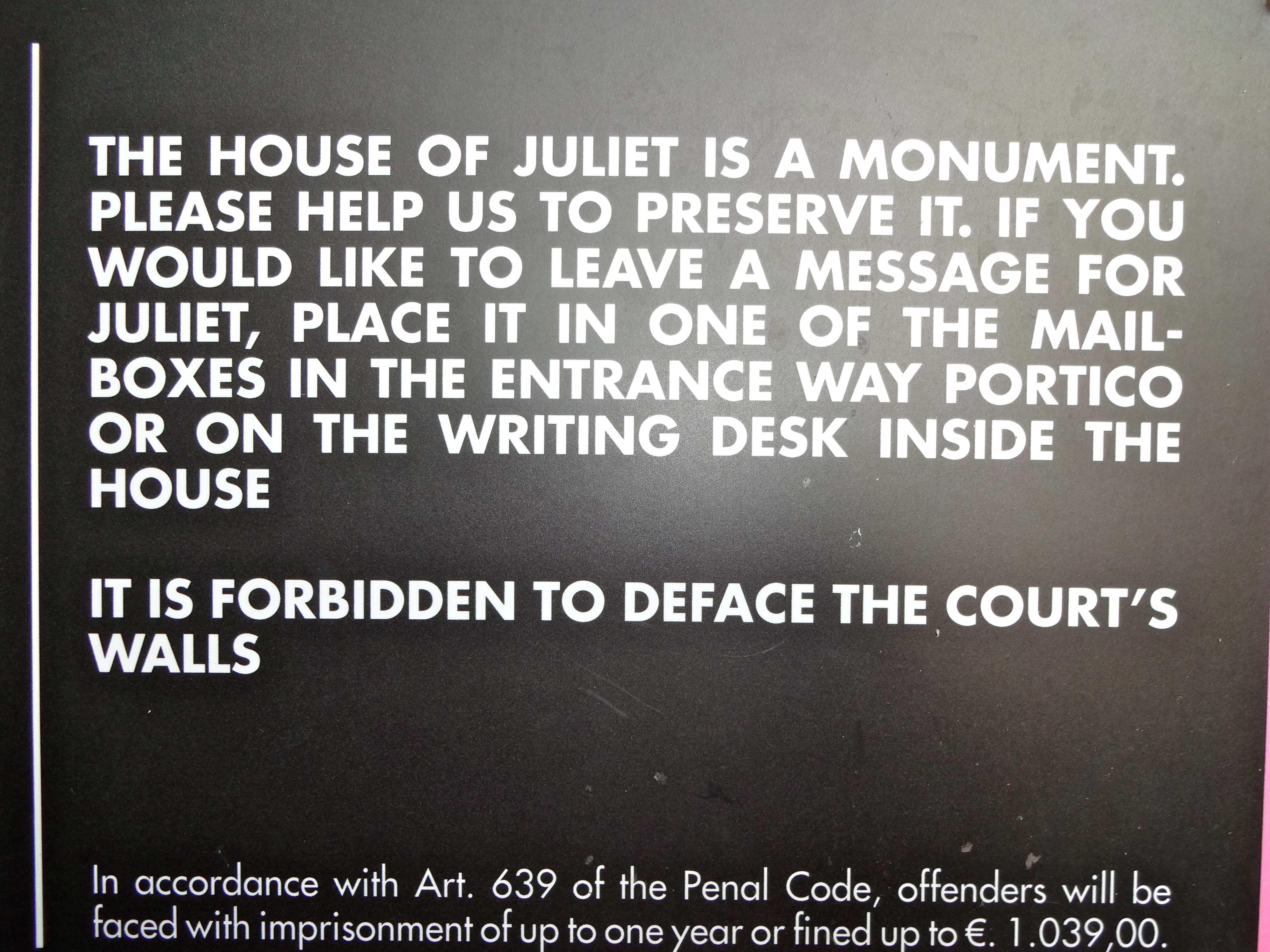
Check out this stern warning!!
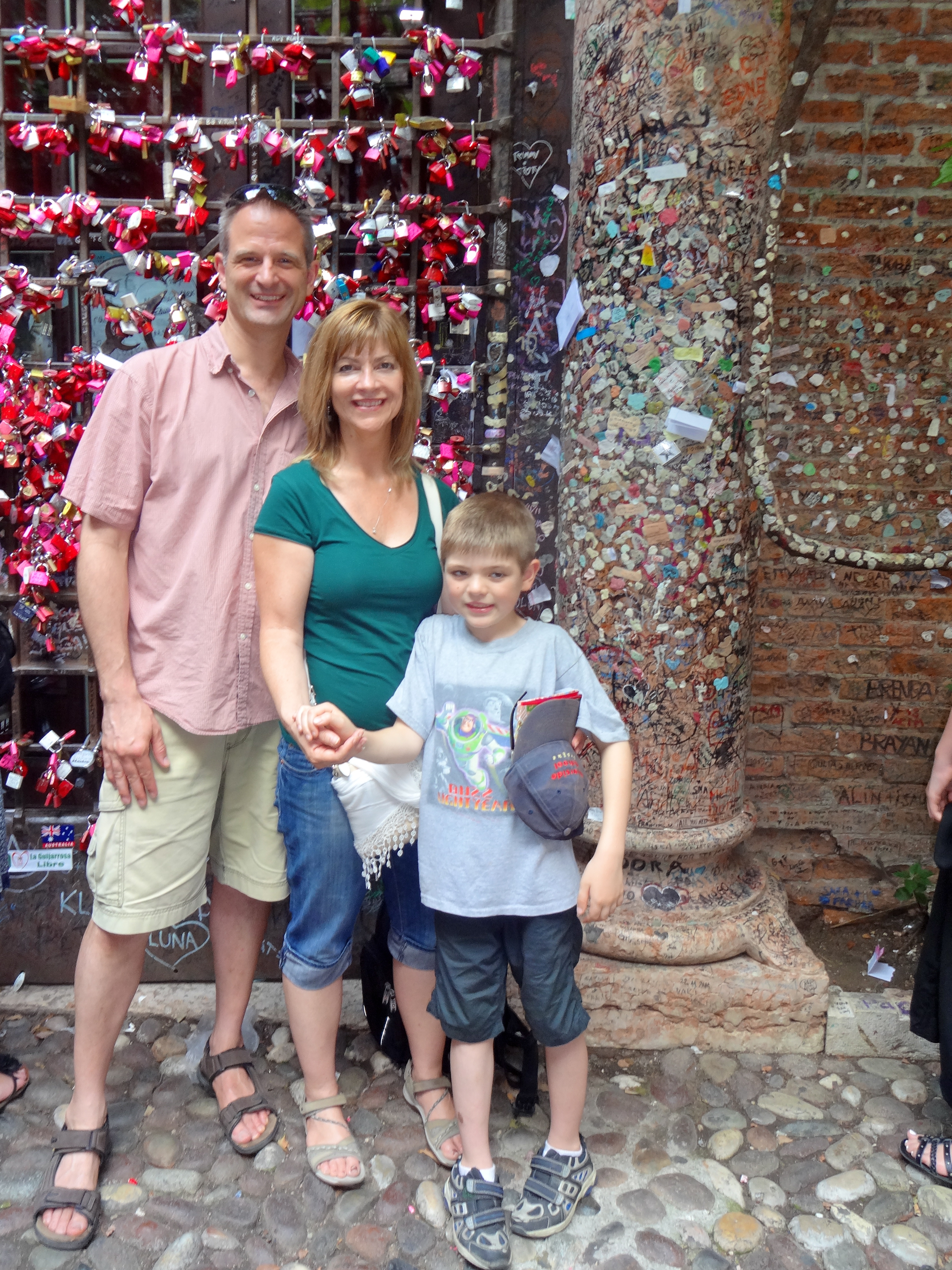
Look at the background behind us. What is it?
Although the house is a major destination for tourists, it actually has no connection with Shakespeare’s characters….who were fictional and therefore never existed:)

Love messages, written on top of chewing gum shaped into hearts…yeesh!
The house itself is old, but the balcony was added in 1936. The house was named Casa Guilietta (Juliet’s House) to attract tourists.

Couples add these locks as a symbol of their undying love…
The balcony overlooks a small courtyard with a statue of Juliet. There is a huge amount of “love graffiti”. Visitors leave notes, as well as write their initials and those of their loved one in chewing gum… which they stick on the walls of the courtyard…risking a year’s imprisonment or a hefty 1039 Euro fine!
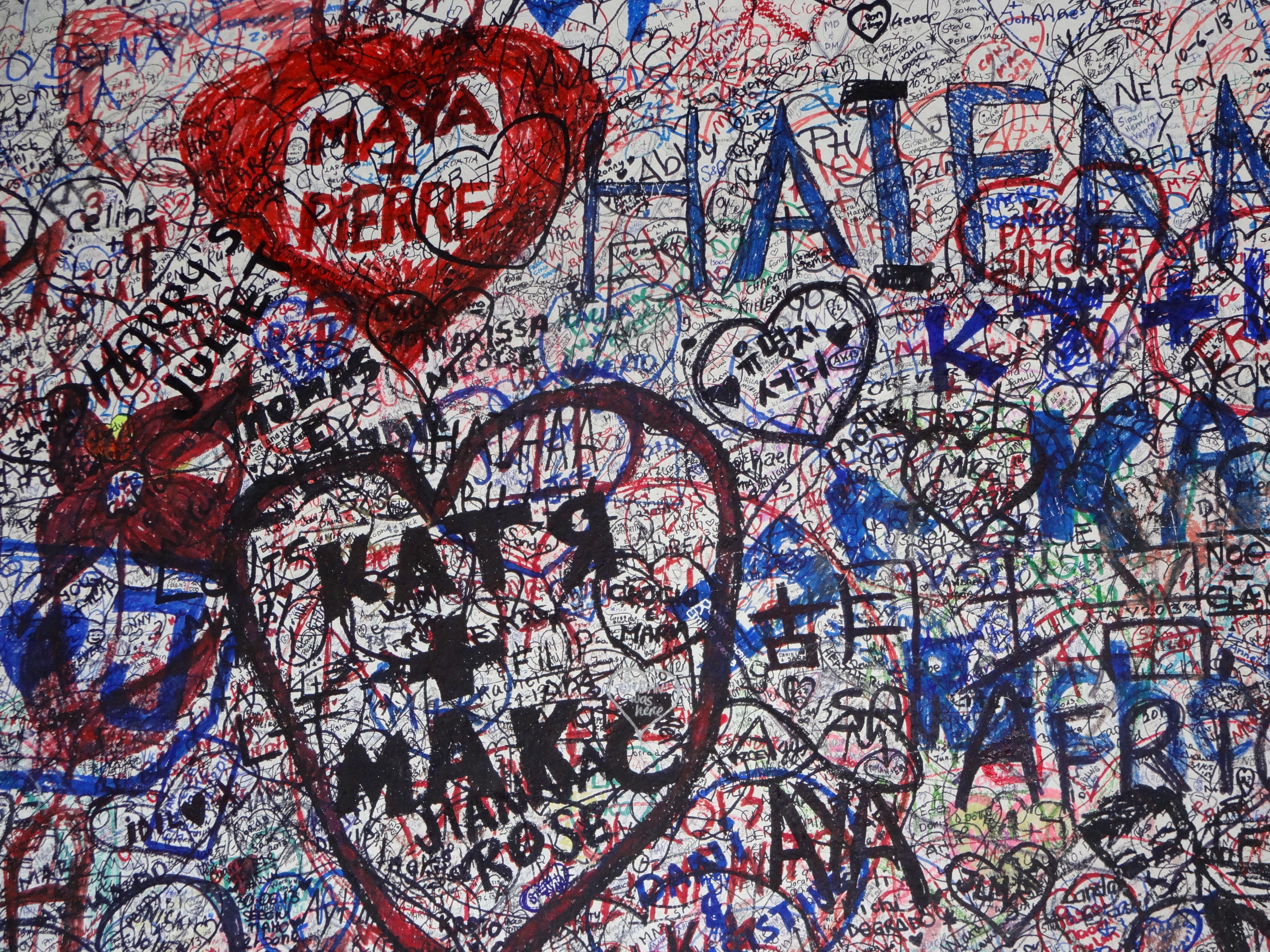
More love graffiti…
We asked our host if it was worth it to see the inside of Juliet’s House, and he told us that most people in Verona are annoyed by the “hype” of Juliet, the congestion of tourists near the “shrine”, and the fact that until recently, an employee was paid to answer love letters to Juliet from lovesick people from around the world. So we took his advice, and didn’t go inside.
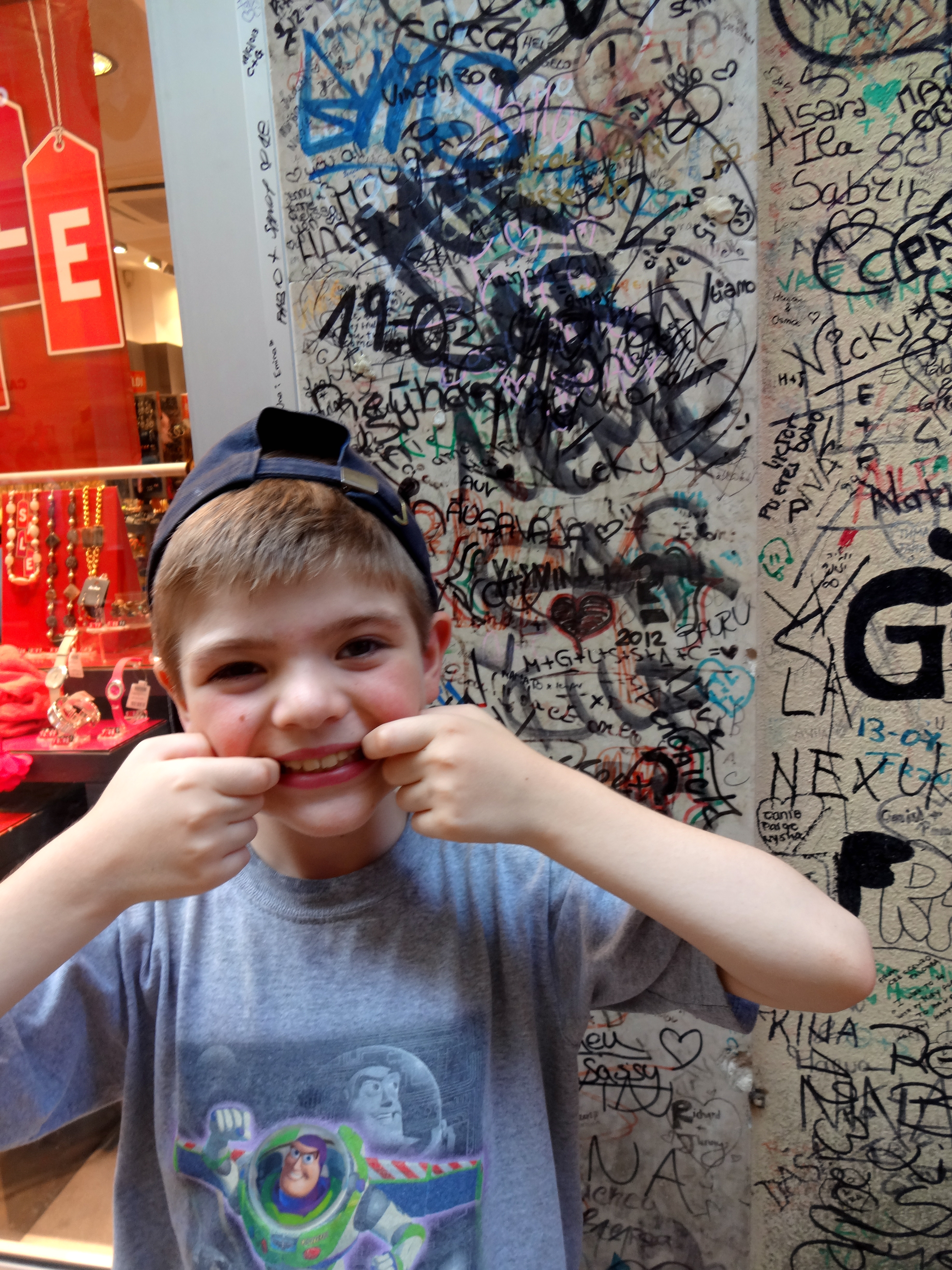
Here’s what our son thinks of all the lovey dovey stuff!!
Apparently, if you pay the 6 Euro entry fee you will see a small collection of Renaissance frescos, and the bed from Zeffirelli’s 1968 movie, but not much more. We spent the money on gelato ice cream instead…a much better choice in Nate’s book!!

This was so interesting Nate gave them a coin!
Ok, now we’re done with the annoying typical tourist stuff. Come see the real Verona with us!
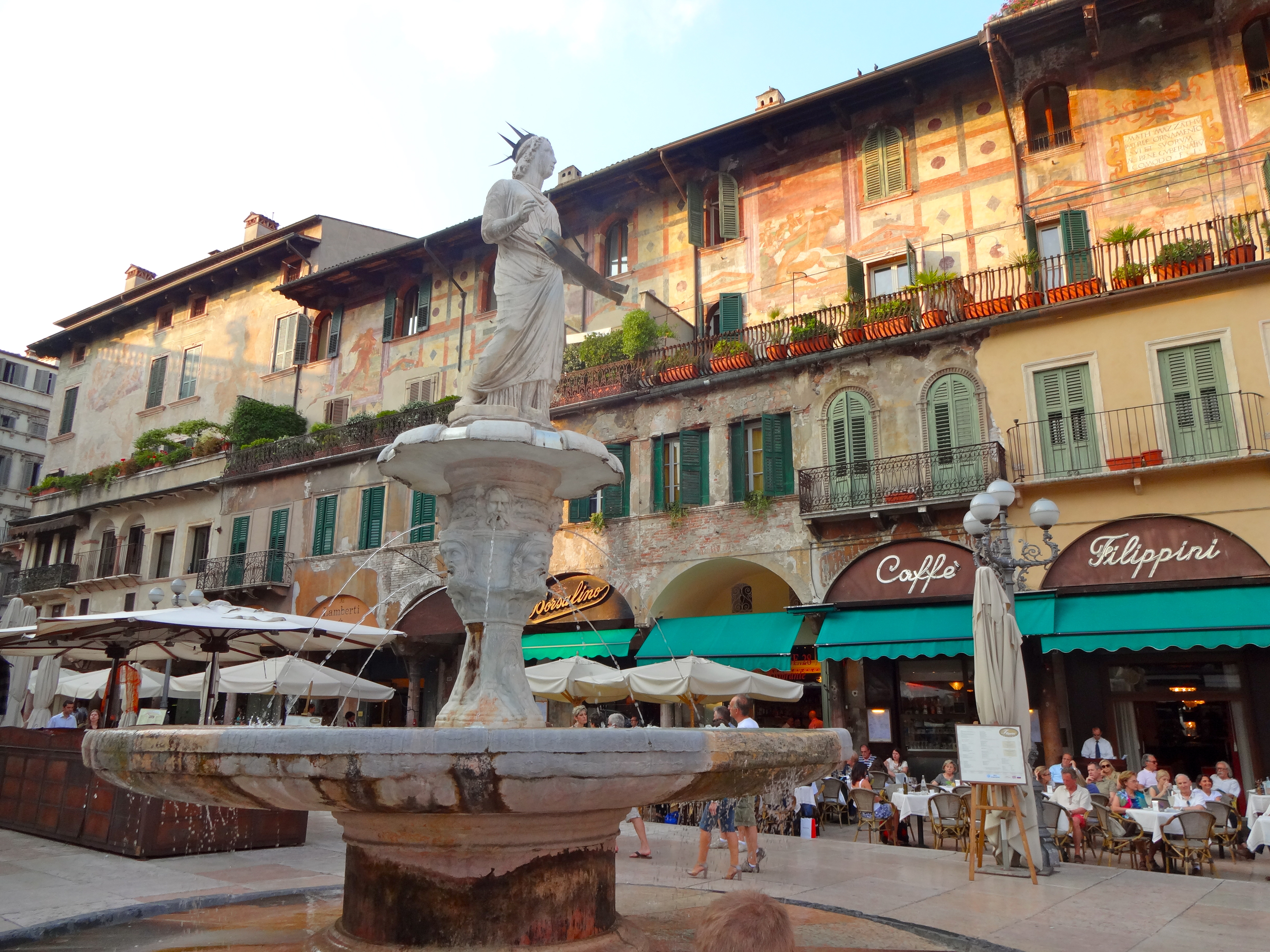
Pizza del Erbe. Look for the close up in the next photo.
Verona was once one of the most powerful cities during the Roman Empire. The historic center is amazingly well preserved, and is a UNESCO World Heritage Site.
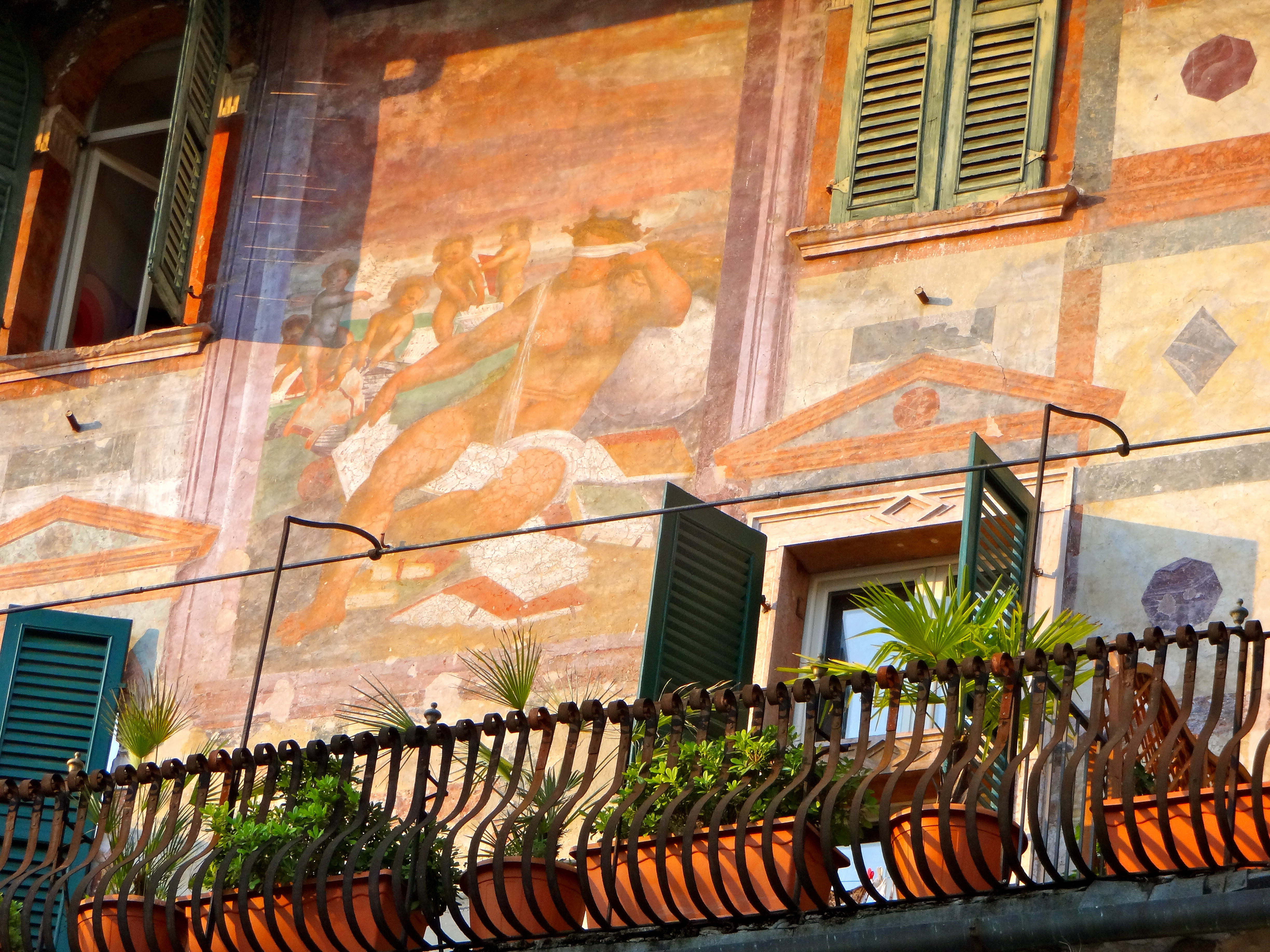
Beautiful balcony!

This is the Lion of St. Mark, symbol of Venice.
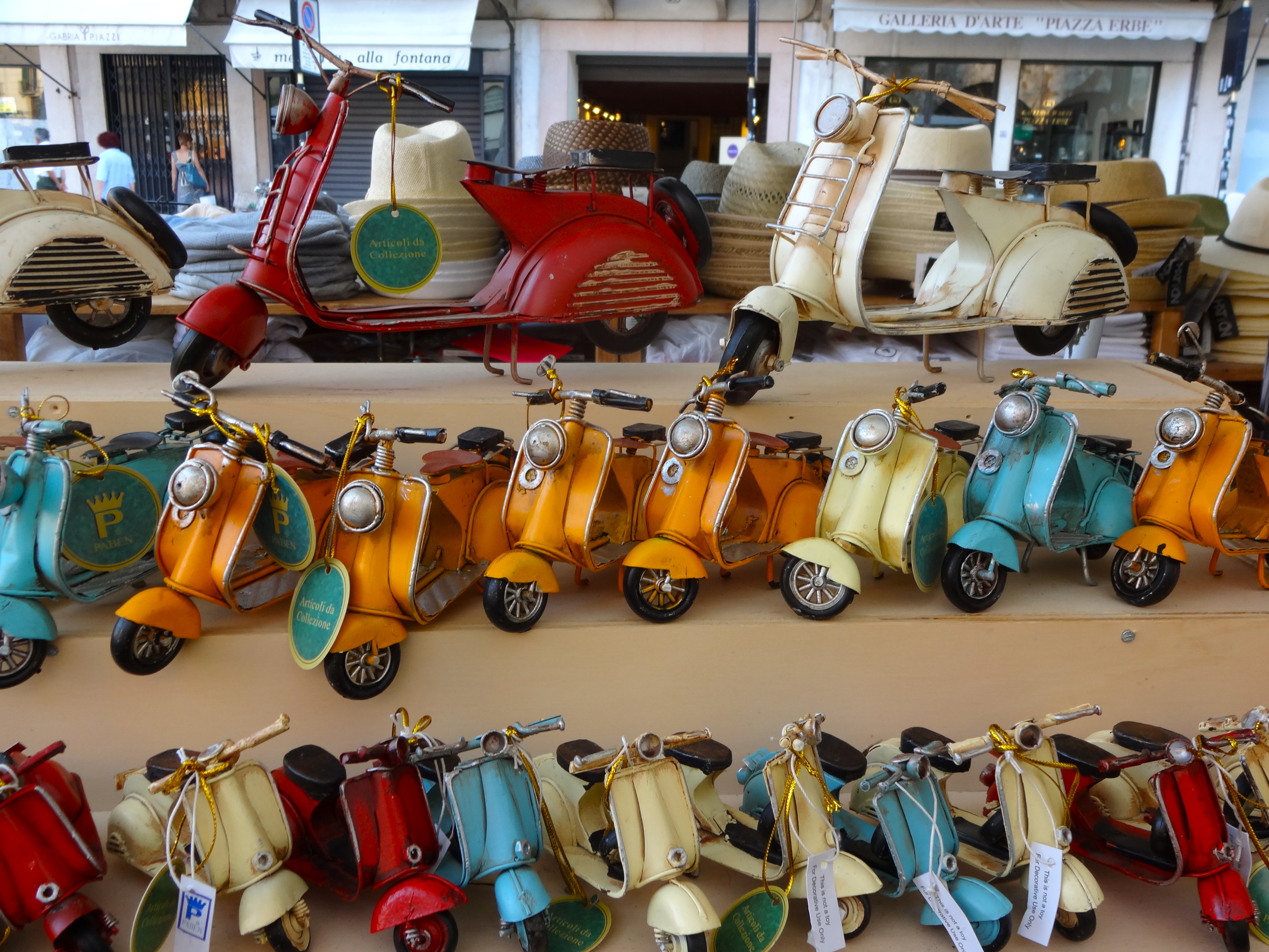
Fun souvenirs!

This lead to another lovely square.
Verona was the home of Dante Alighieri, writer of the Divine Comedy. You can read more about Dante’s tumultuous life here:
http://en.wikipedia.org/wiki/Dante_Alighieri

That’s Dante!
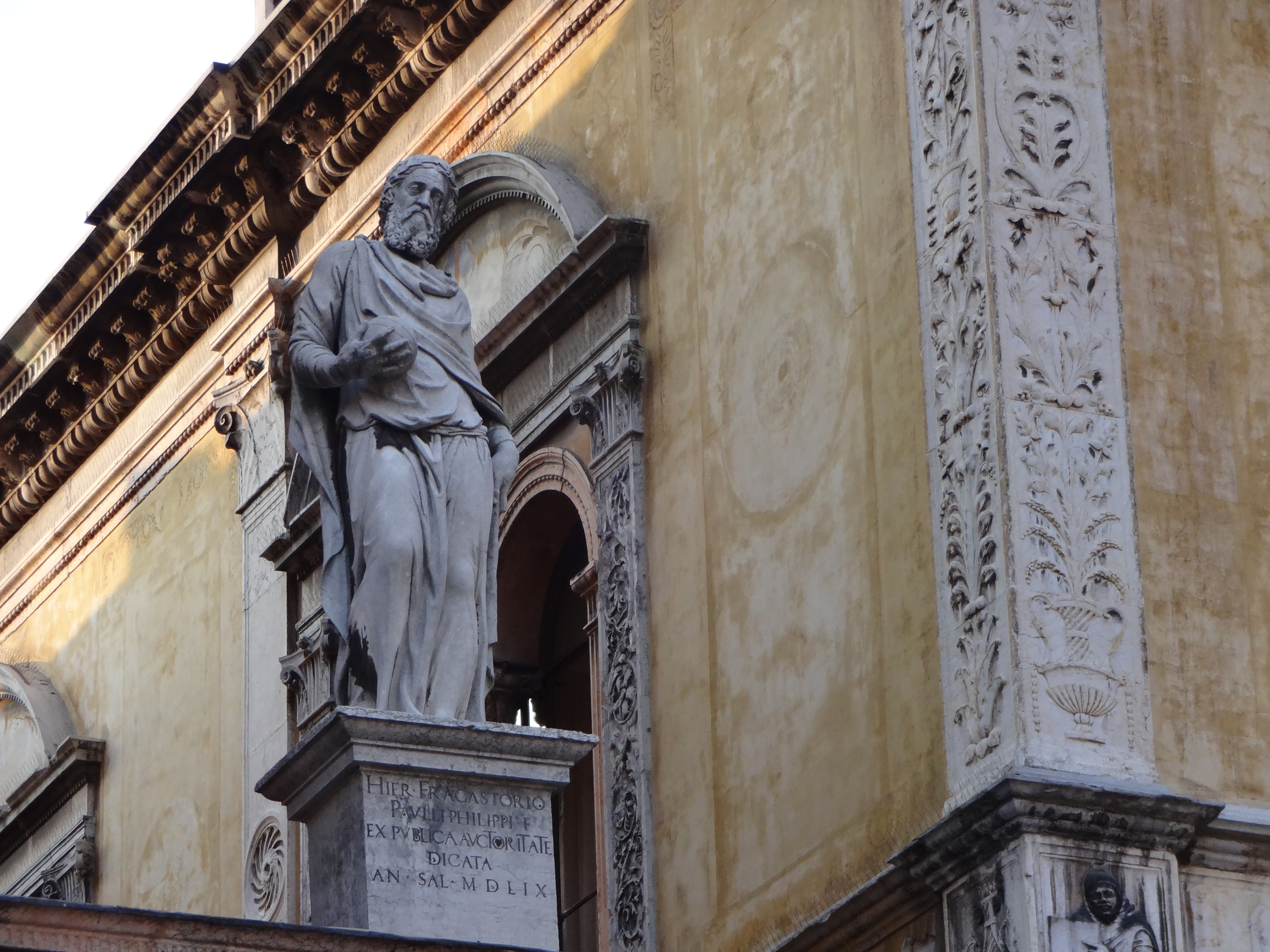
Verona was also the setting for two more of Shakespeare’s works: The Two Gentlemen of Verona and The Taming the Shrew.

Nice place for a meal!
The scenic mausoleum of Arche Scaligere houses outdoor tombs of the Scaligeri lords who ruled Verona for hundreds of years.
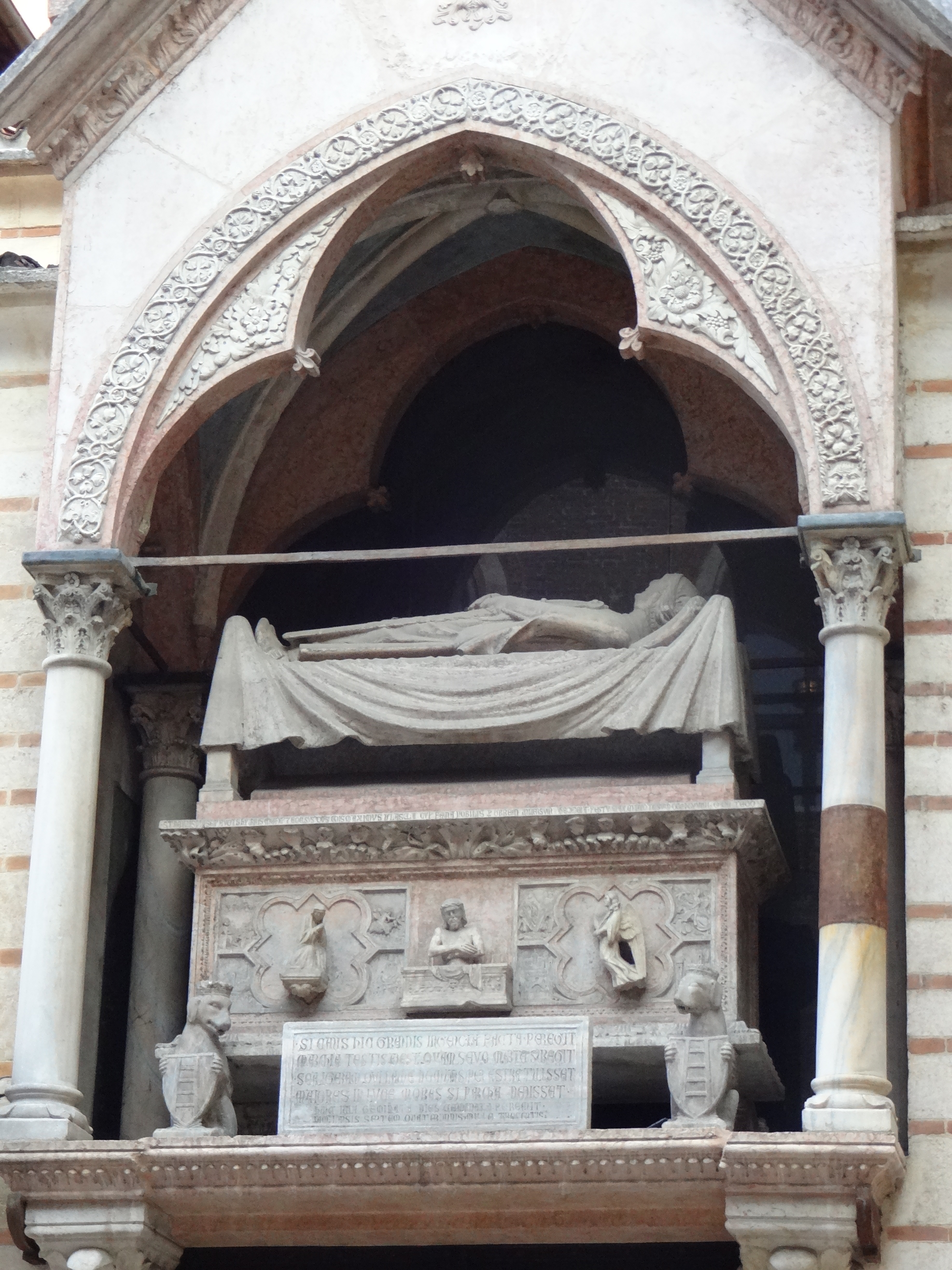
Arch of Scaglieri

The architecture is stunning!
So, for those of you following along with us, this was Day Six of our European road trip. I hope you enjoyed learning about Verona. Coming soon will be posts about seeing an opera in Verona’s Arena, built in the 1st Century BC, as well as our trip to Venice.

Vicenza! Look for the close up in the next photo.
Most people skip this beautiful town as they race around to northern Italy’s bigger attractions such as Venice and Verona. But we were so glad that we didn’t! There were stunning architectural masterpieces scattered throughout the city…as you can see in the photos below.

Amazing detail!
The photos above, and the next seven that follow, were taken at Pizza dei Signori, which is the big central square of Vicenza. It was the center of social and political life since the Roman Era!
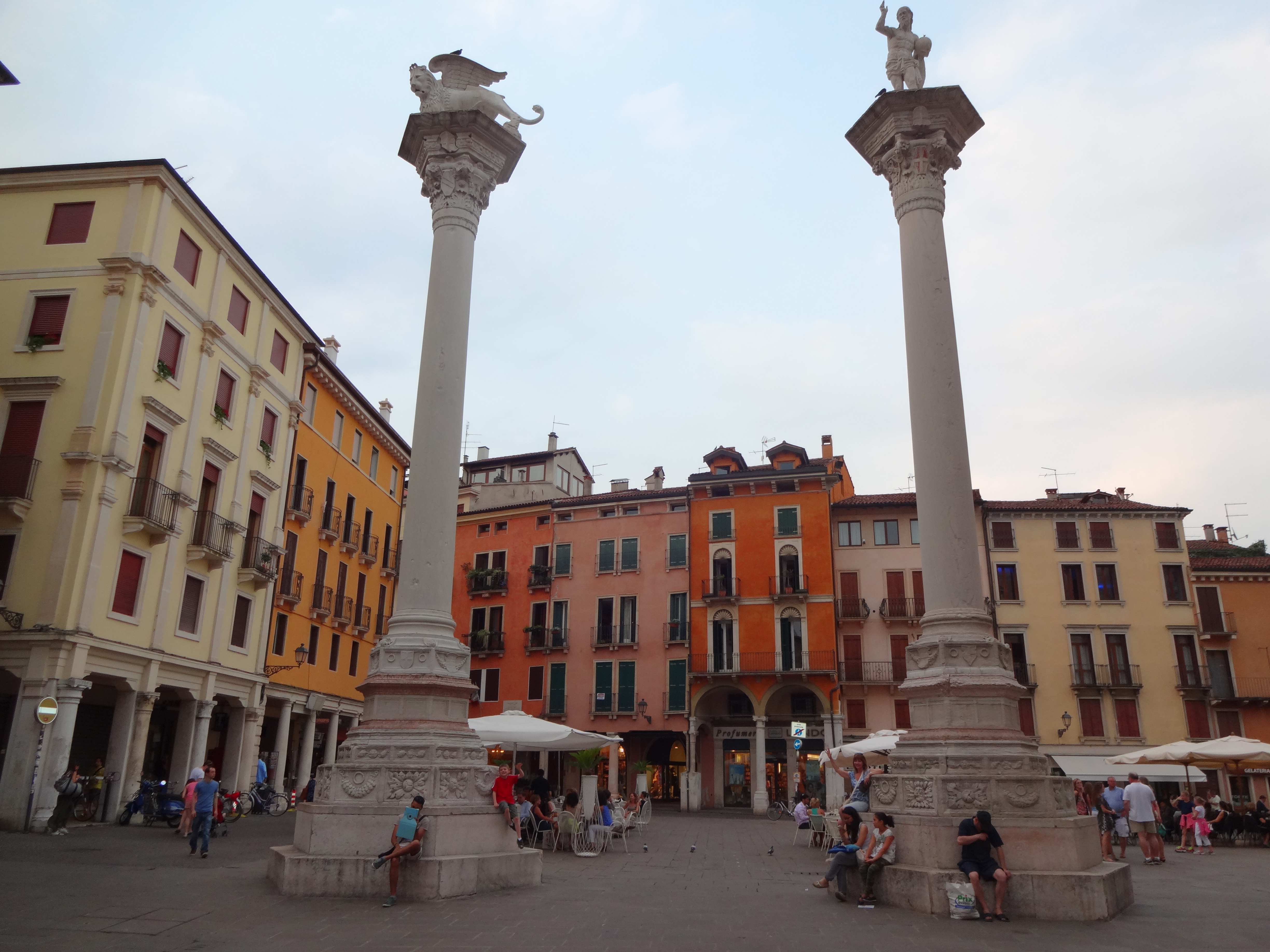
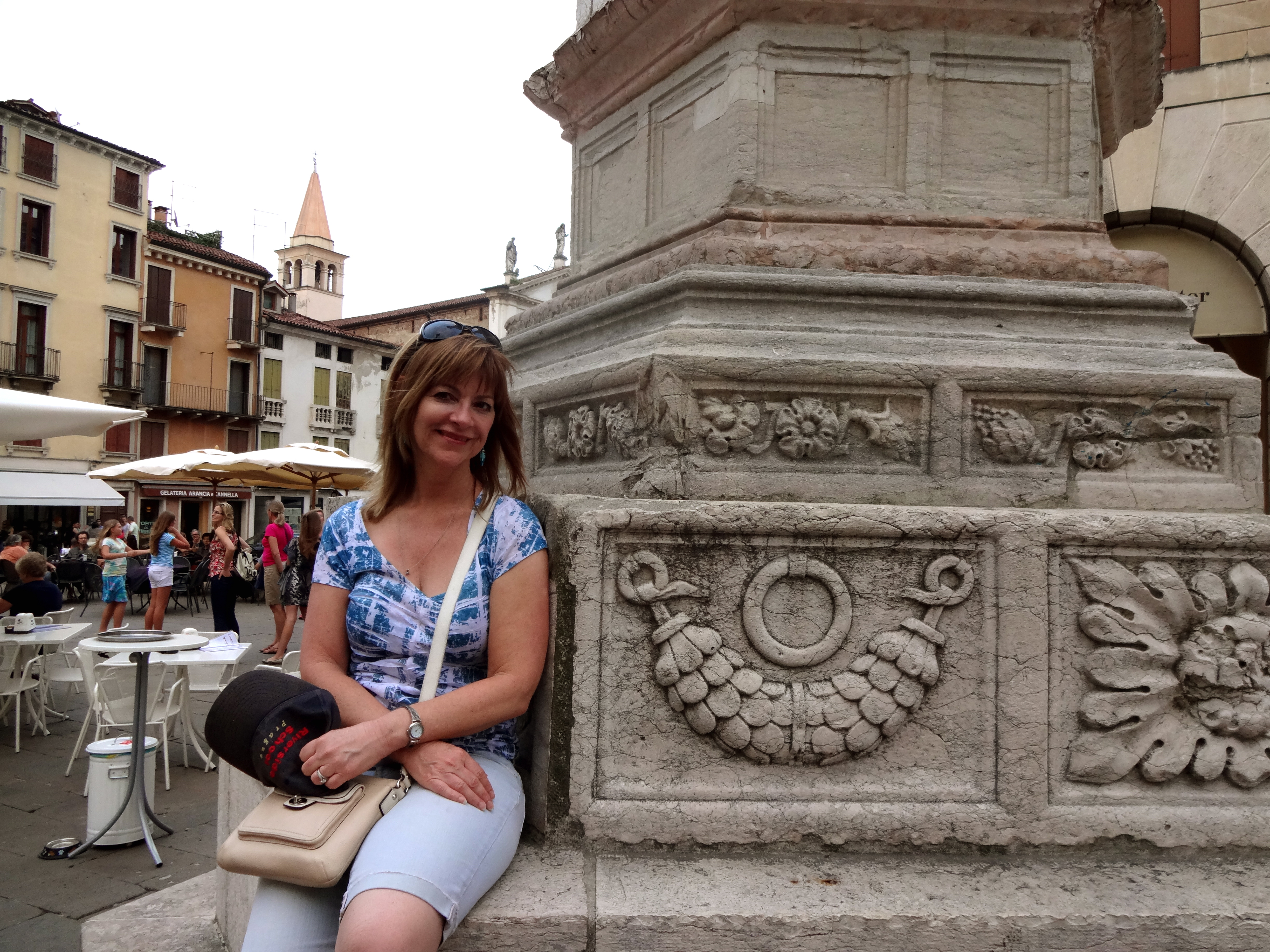
Can you find Nate and me at the base of the monuments? Look for the close ups in the next three photos.
Vicenza was founded by the ancient Venetos, then it passed to the Romans.

It was invaded by Barbarians (the real ones, not small children like this one who frequently forget their table manners) in late Roman times!
It became a Dukedom under the Lombards, and later a County under the Franks.
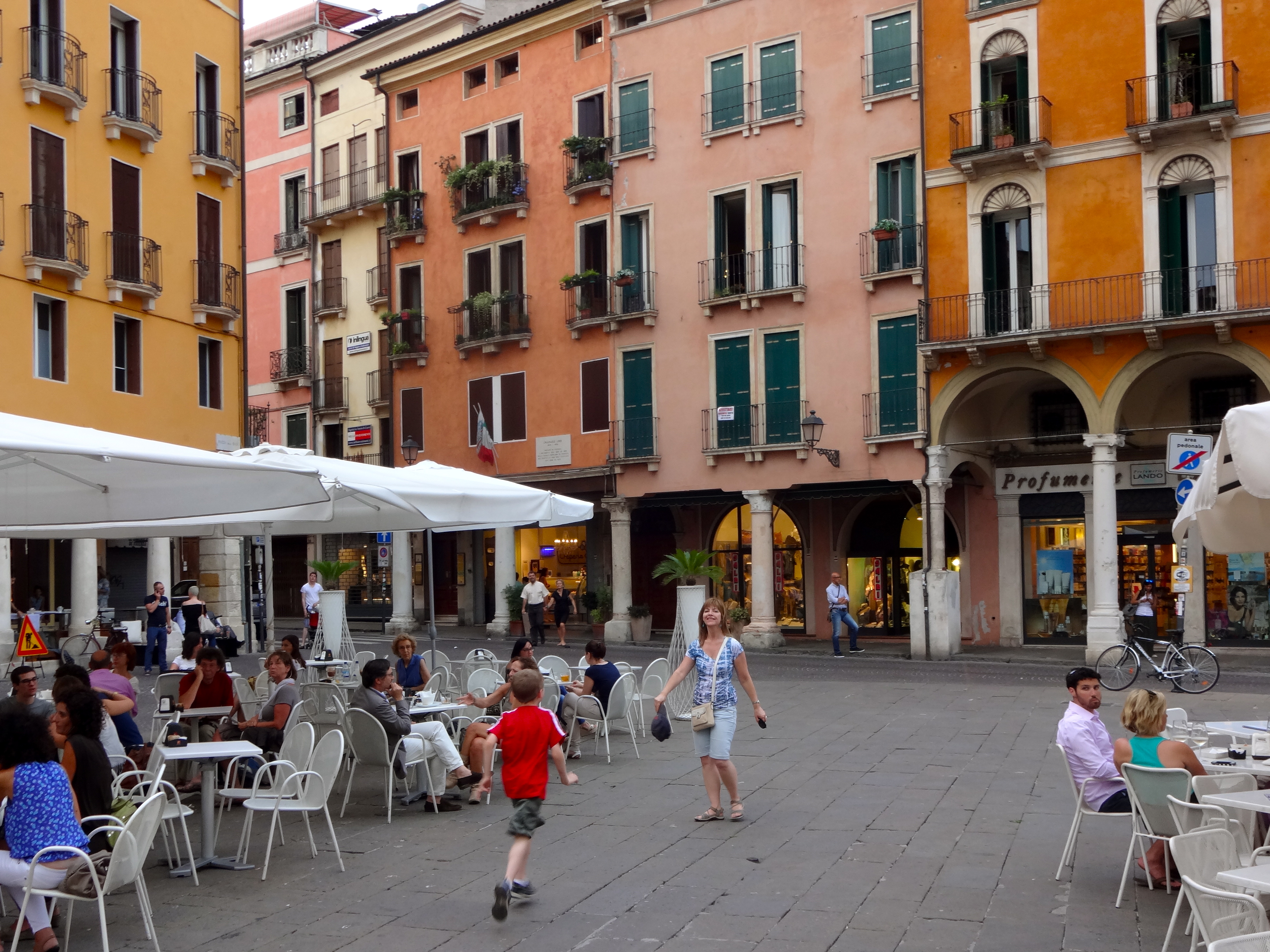
Playing steal the hat and run!
It became a Free City-State in the 12th century.

More goofing around…check out the close up in the next photo.
The tower is 230ft high. The basement was built in the 12th century, whereas the upper part of the tower was added in the 14th century.

Every self-respecting European town seems to have a picturesque clock tower….although Prague’s clock tower is the best of all!
Vicenza voluntarily came under the dominion of the Republic of Venice in the early 15th century, and then enjoyed a long period of prosperity.
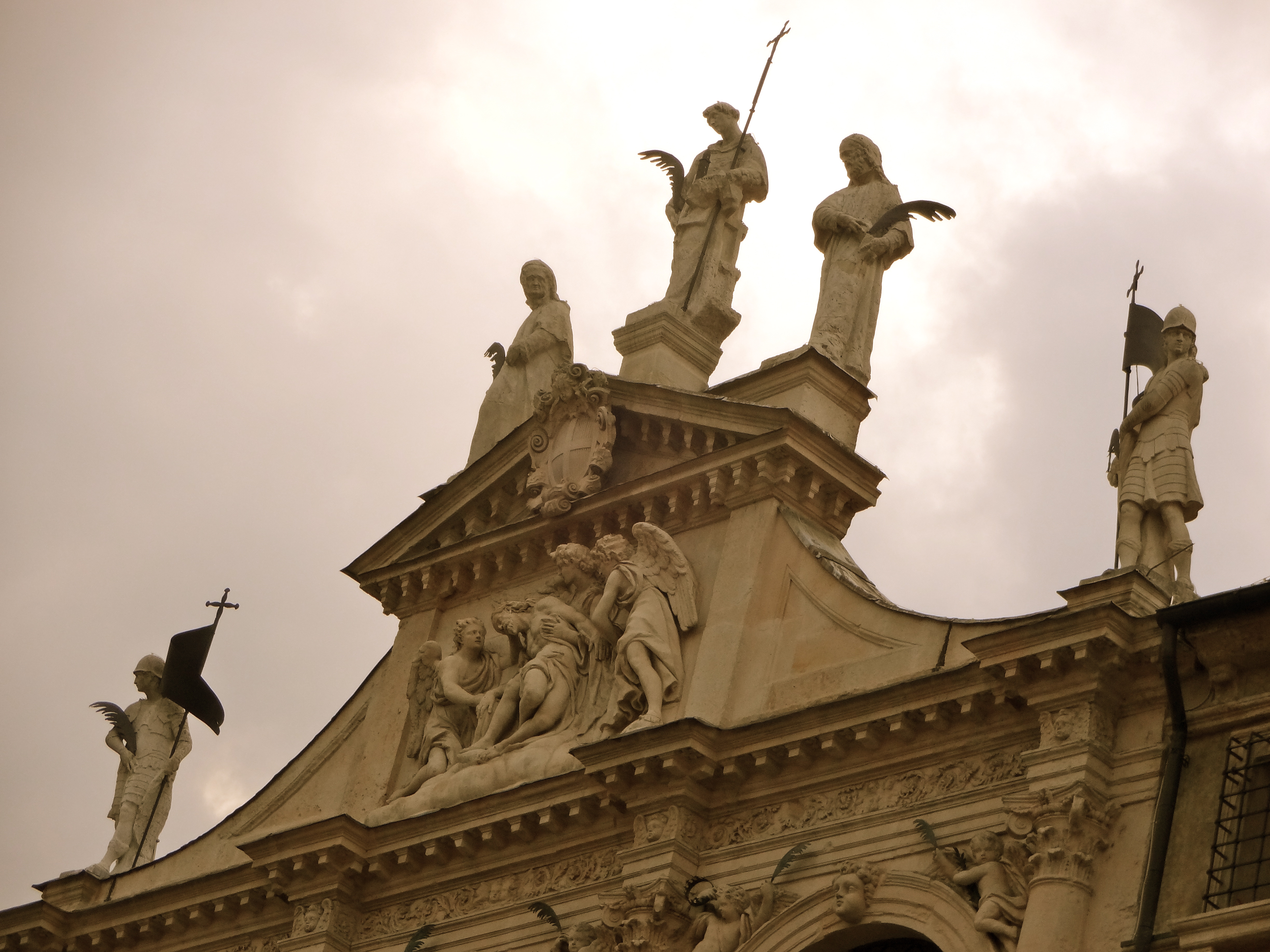
The architecture around the city was stunning!
In the 16th century the architect Andrea Palladio turned Vicenza into a treasure of Renaissance architecture. His name is everywhere in the city!
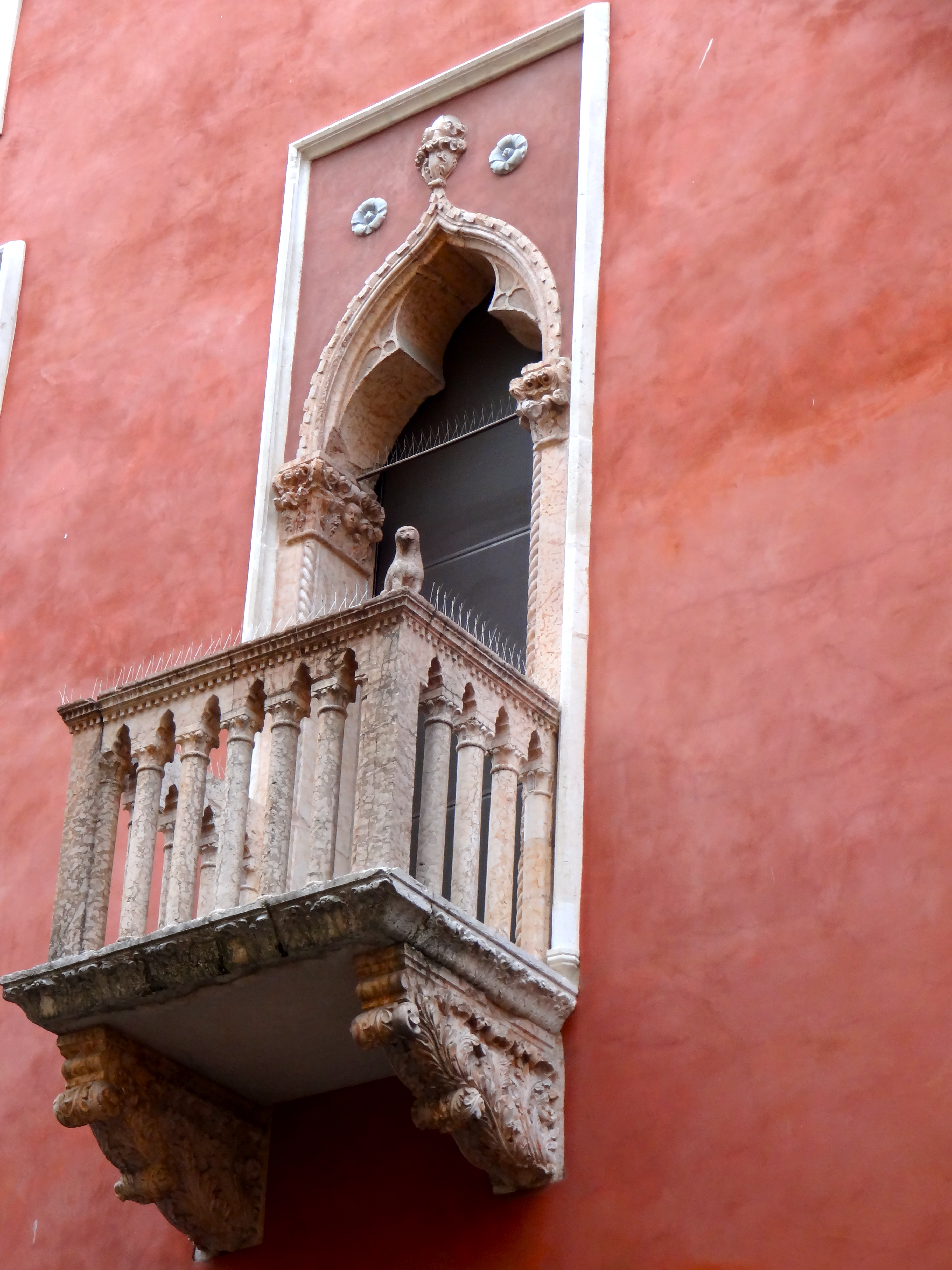
You can see the Venetian influence.

In the late 18th century Vicenza passed under Napoleanic rule.

Later, Vicenza passed to the Austro-Hungarian Empire.

Nate delighted this street performer by insisting that we give him a coin!
In the 19th century Vicenza joined the Kingdom of Italy.
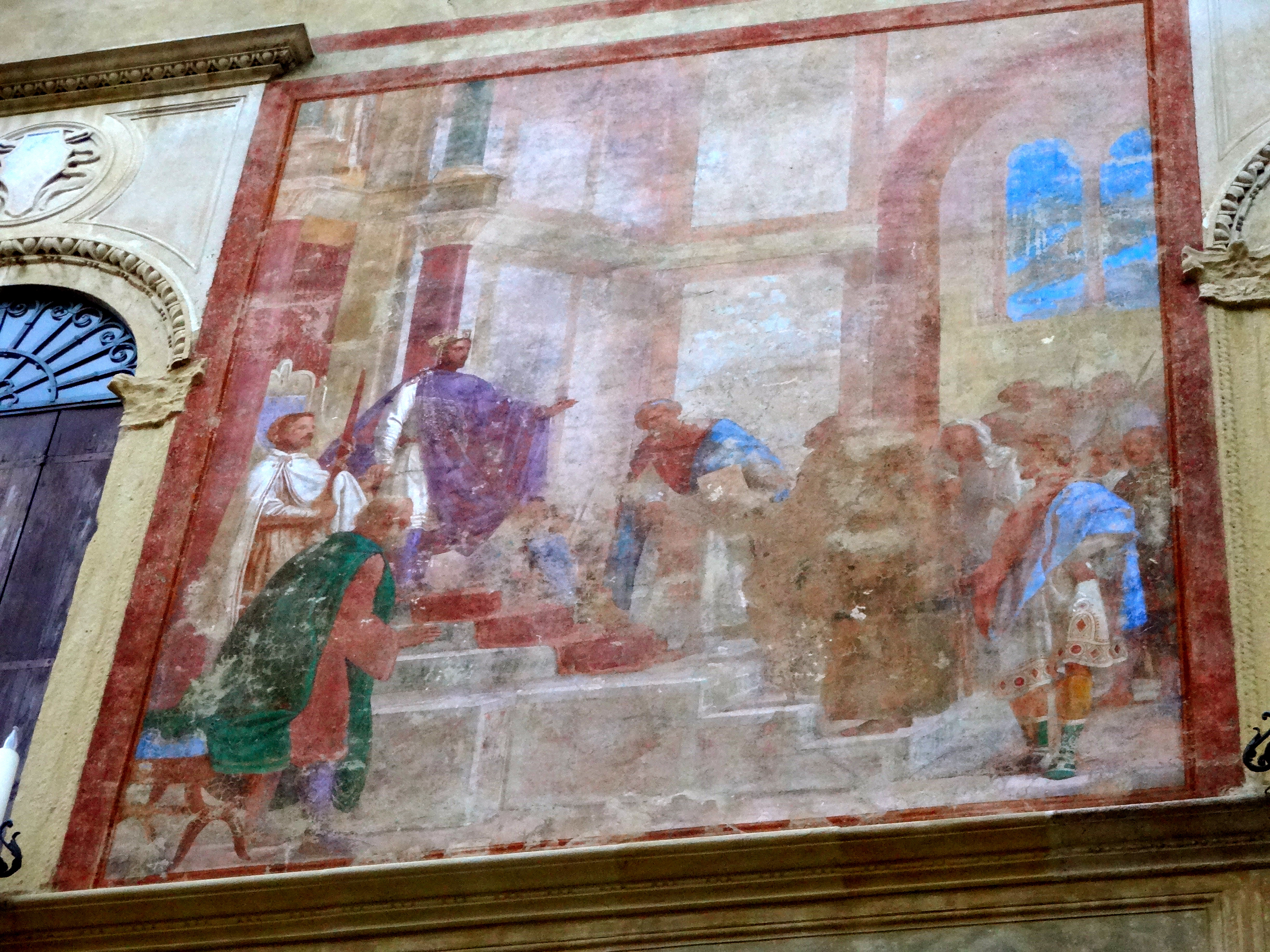
There were pallazos (palacial mansions belonging to the nobility) scattered throughout the city…this is one of them.
I hope this post will inspire anyone traveling in this area to make time to see this beautiful city…I’m glad we did!
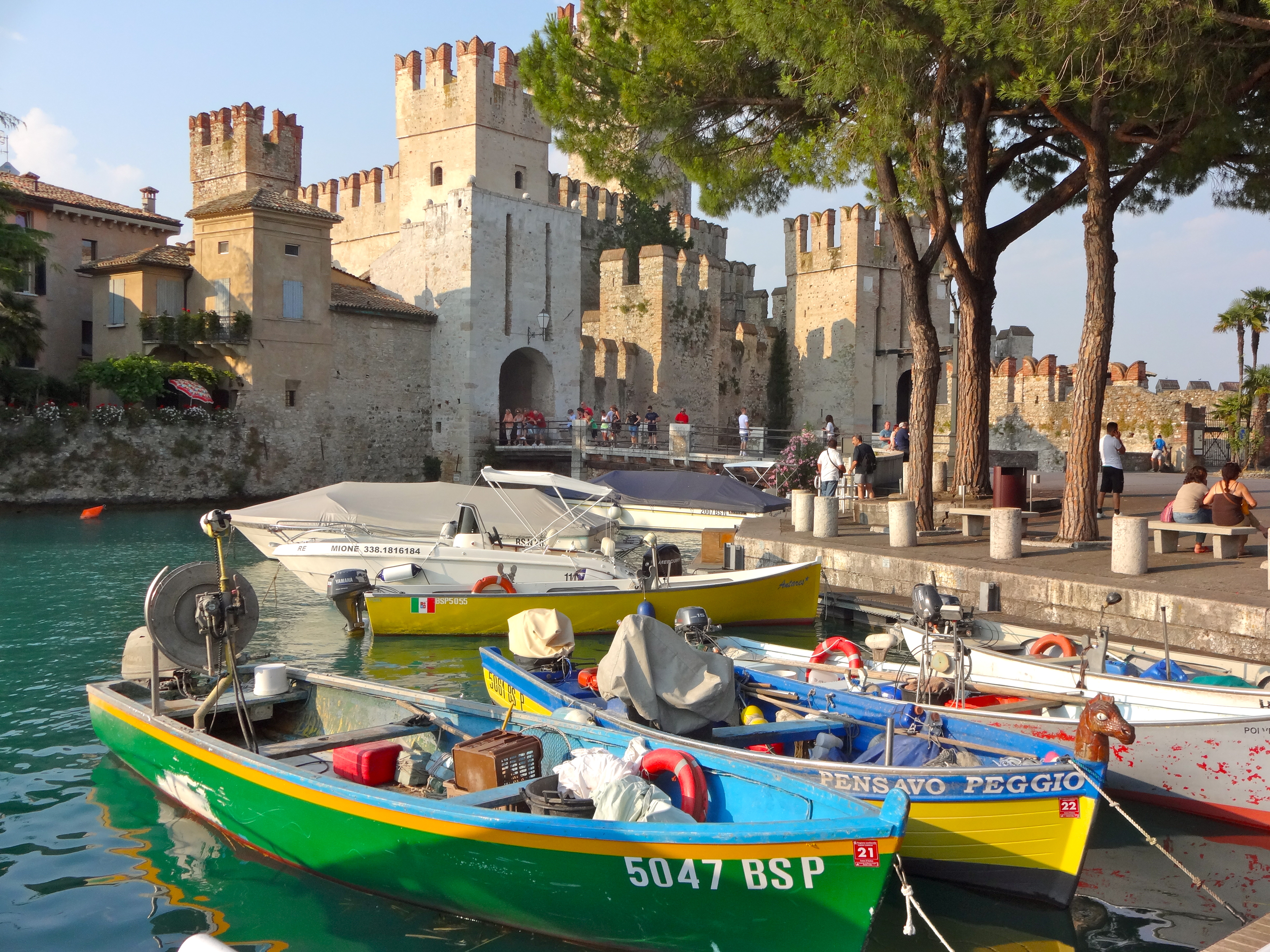
Scaliger Castle in the town of Sirmione, Lake Garda.
Friends in Prague highly recommended that we visit Lake Garda, and now I know why! It has a very Mediterranean vibe to it, even though it is in northern Italy.
We are very laid back travelers…we like sleeping late, having brunch and pottering around the flat. We rarely get out before noon; and our host recommended that we get out in the mornings and evenings to avoid the midday heat. So we’ve been setting out mid-afternoon and coming home late…it suits our family of night owls!

First, we stopped for an evening picnic.
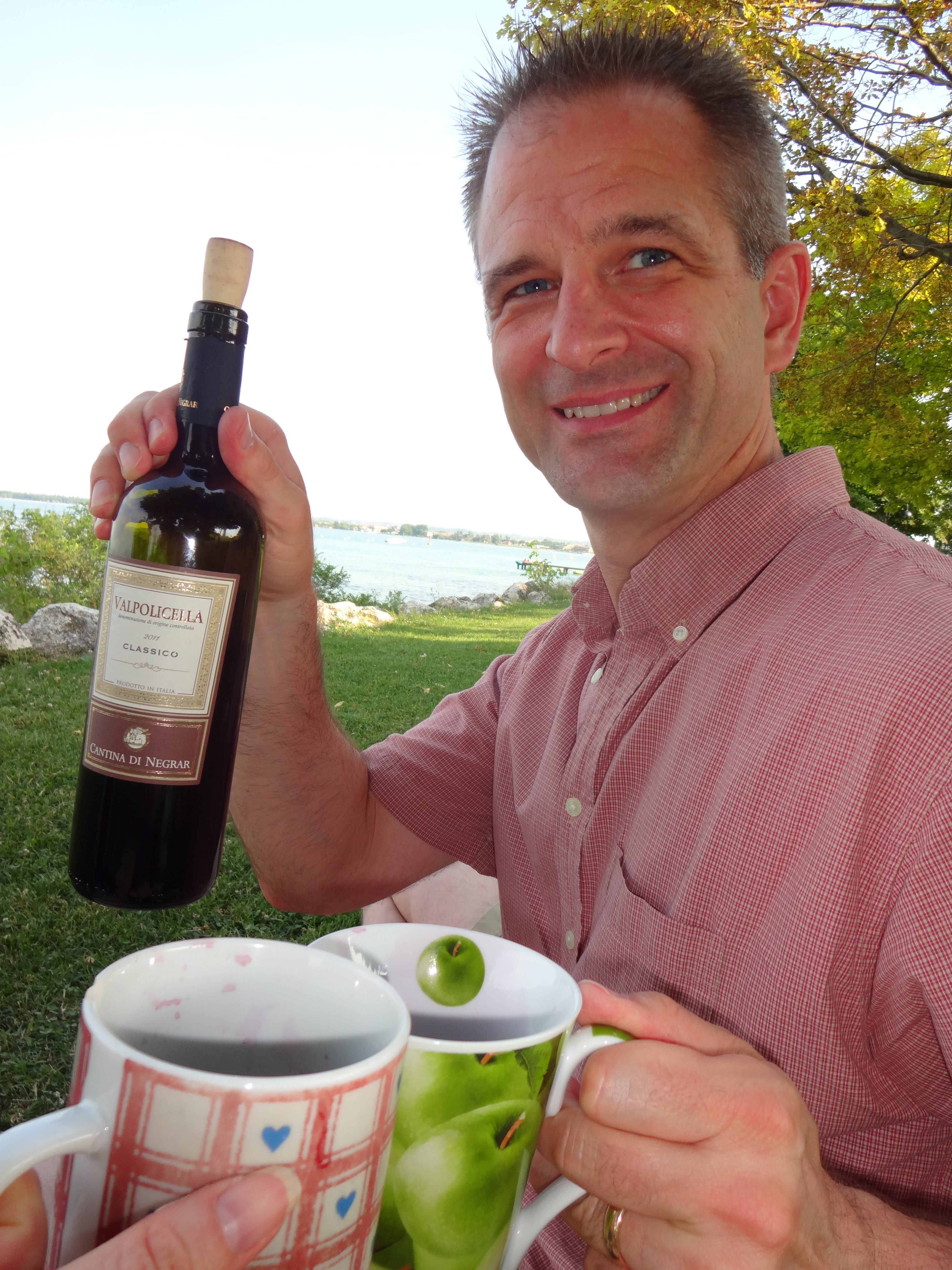
No picnic is complete in Italy without wine! Although I doubt Italians would use coffee cups:)

After our picnic we went on to the old city area.
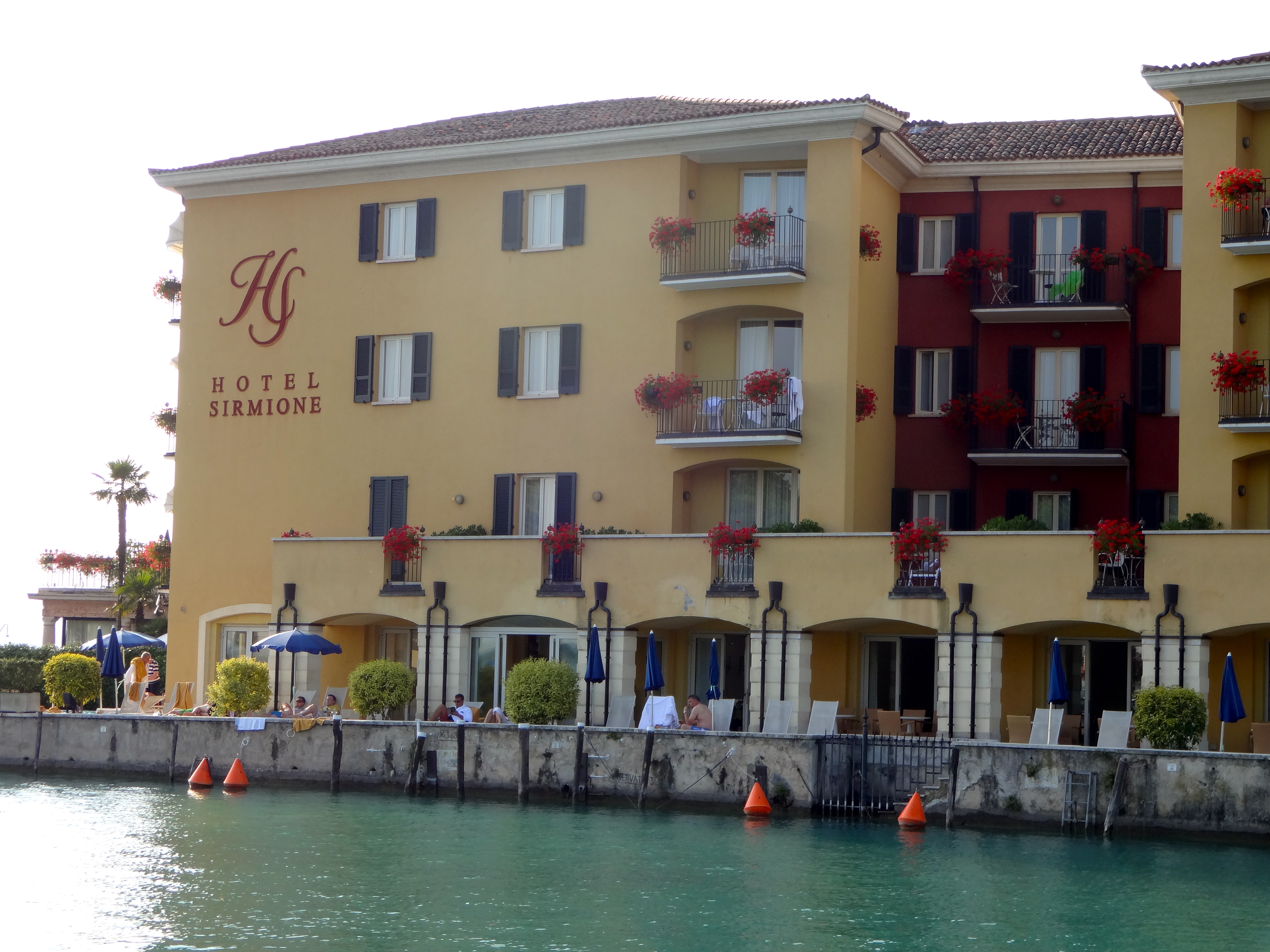
This is what you see as you are walking up to the historic town on the end of the peninsula.
Lake Garda, including what is now Sirmione, was a favourite resort area for rich families from Verona since the 1st century BC! At that time Verona (where we are now staying) was the main Roman city in north-eastern Italy.
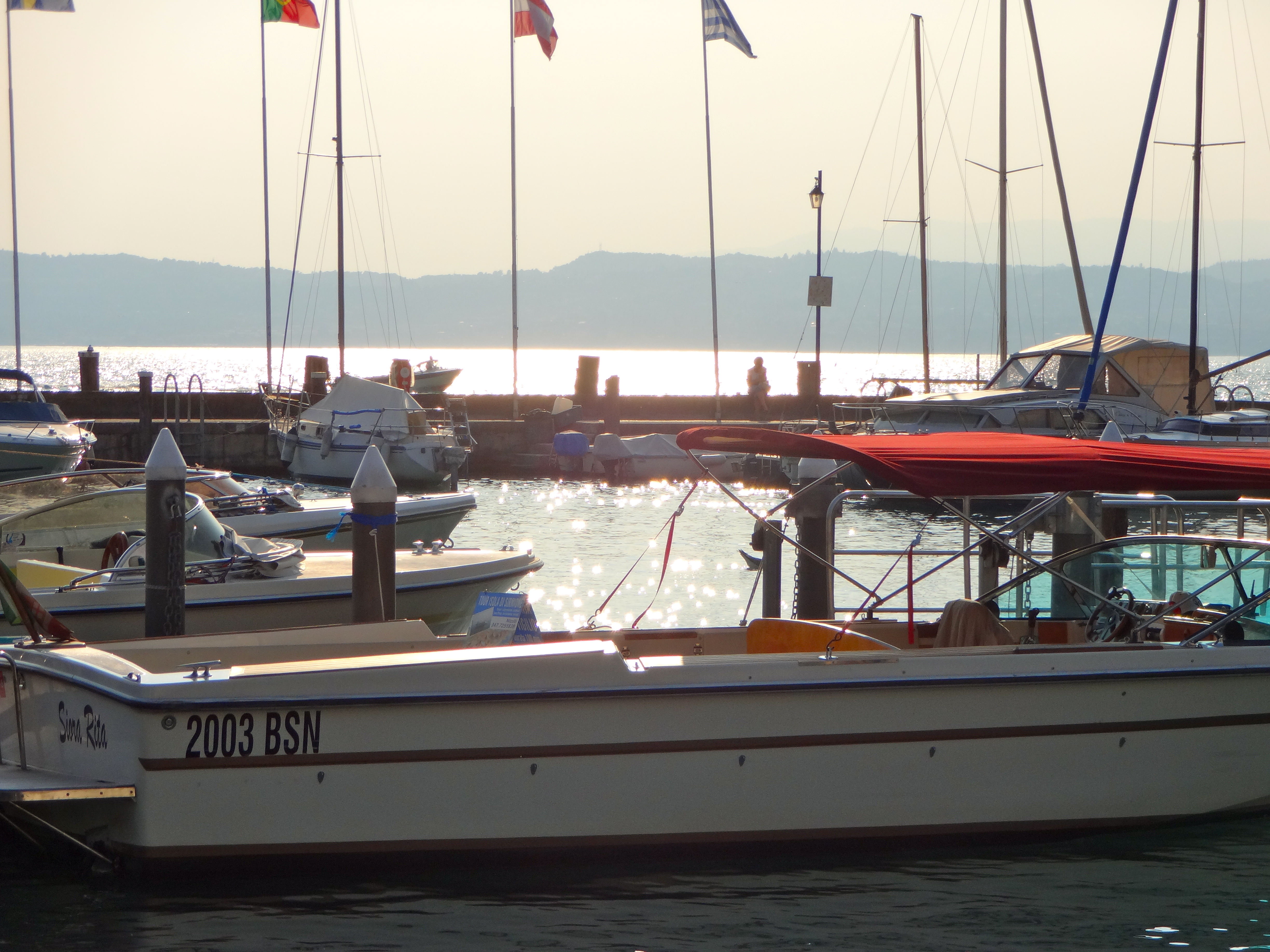
This lovely spot was the scene of several invasions following the fall of the Roman Empire.
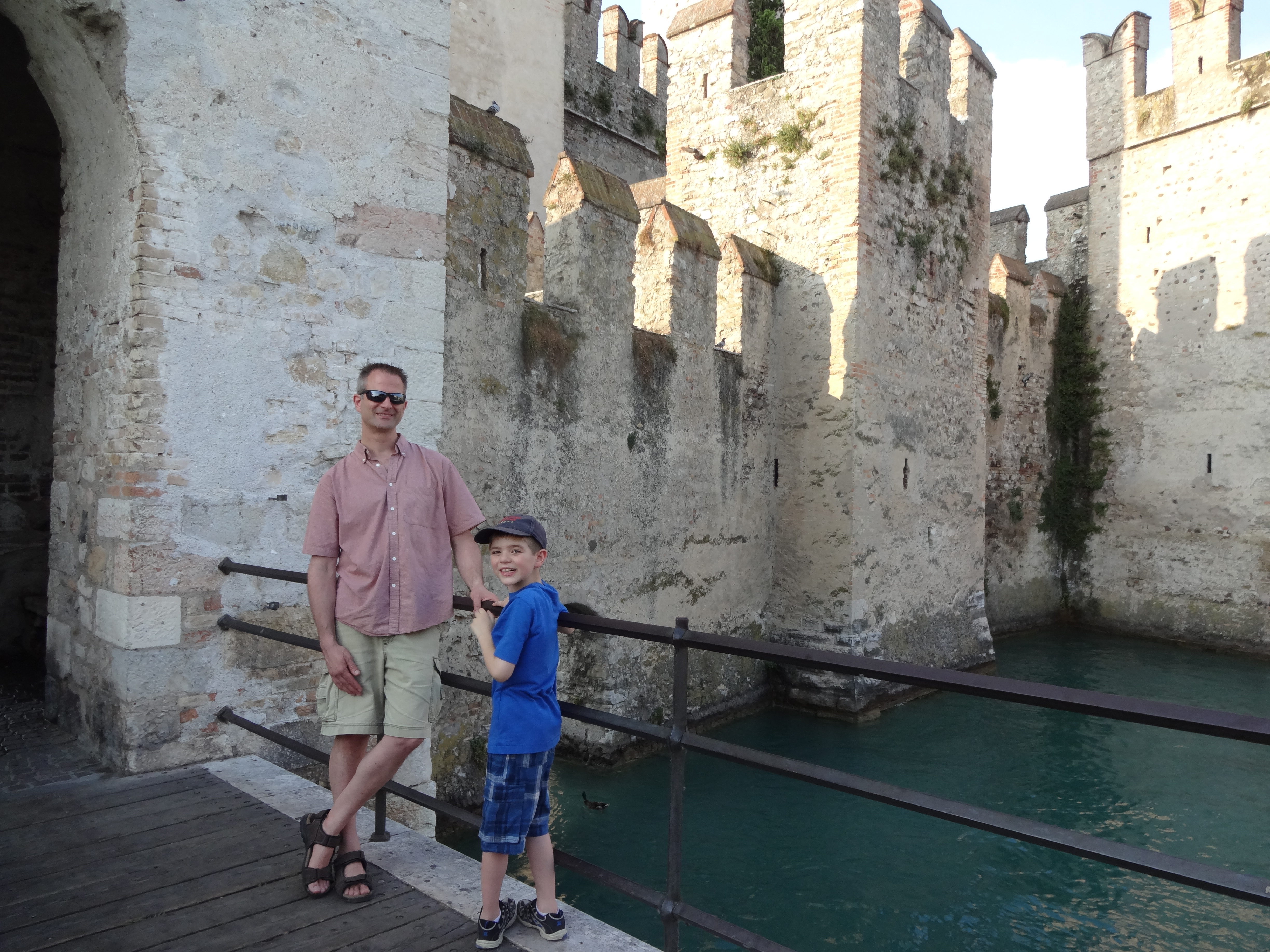
Entering the old town: Scaliger Castle…built in the 13th century.
The noble family of the Scaliger, also know as Scaligeri, were the rulers of Verona in the 13th and 14th centuries.
You can read about their turbulent family history here:
http://en.wikipedia.org/wiki/Scaliger

Look for the close up in the next photo.

Everything was so colorful! Notice that the pizzeria is named for the Scaligeri family.

It was fun walking through the streets… mostly all pedestrian areas.
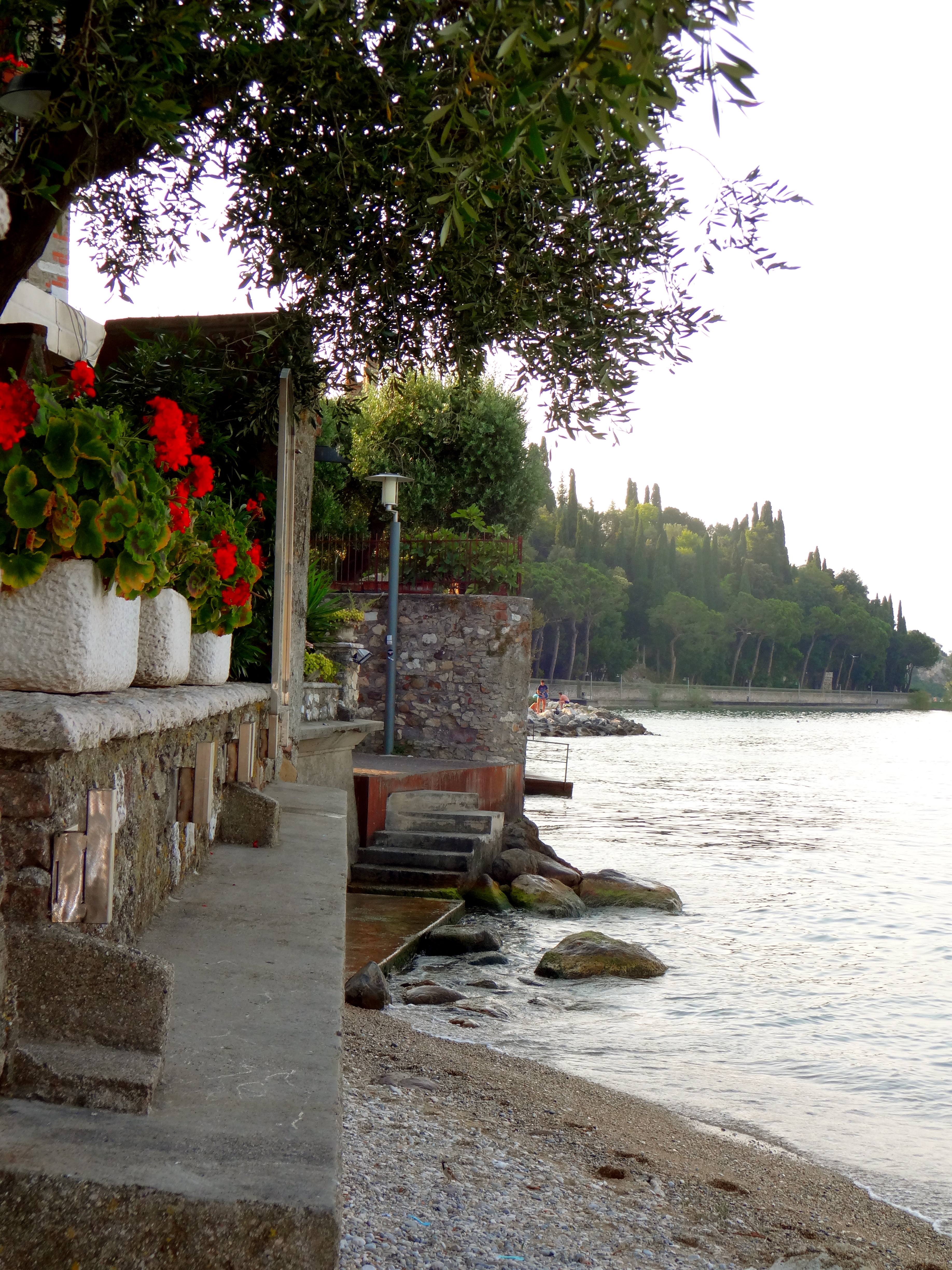
The lake is lovely in the evening.

Scaliger Castle was part of a defensive network surrounding Verona.
I learned that Sirmione has had a very turbulent history because of its strategic location in northern Italy. The town has witnessed the struggles in the Middle Ages between the Ghibellines (emperor supporters) and Guelphs (Pope supporters). You can learn more about it here:
http://carneycastle.com/Sirmione/index.htm

This picturesque town has seen some gruesome things take place in its history.
Cathars (considered heretics by the Catholic Church) took refuge here in the mid-1200’s. However, the last 166 Cathars were captured in 1276 and taken to the Arena of Verona and burned at the stake. You can read about their story here:
http://grantouritaly.blogspot.it/2012/09/sirmione-sanctuary-for-heretics.html

Nice place to share a bottle of wine…

I’m displaying my weakness for taking photos of cute balconies:)

Nate hates posing for photos so we bribed him with ice cream!

It’s amazing the smiles that can be obtained with the incentive of ice cream!
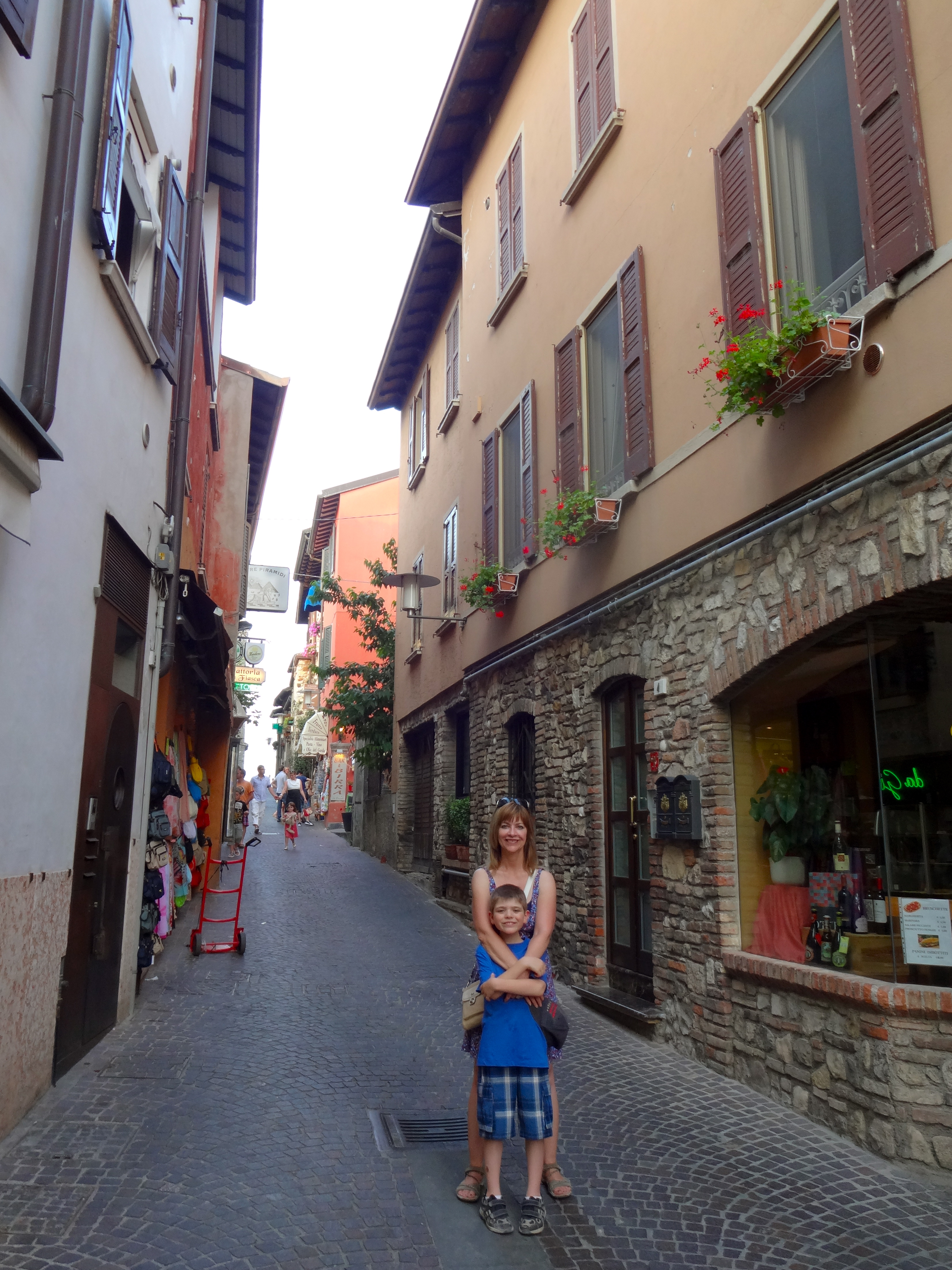
Now he was suggesting photo ops…

No day is complete without a visit to the gelateria!
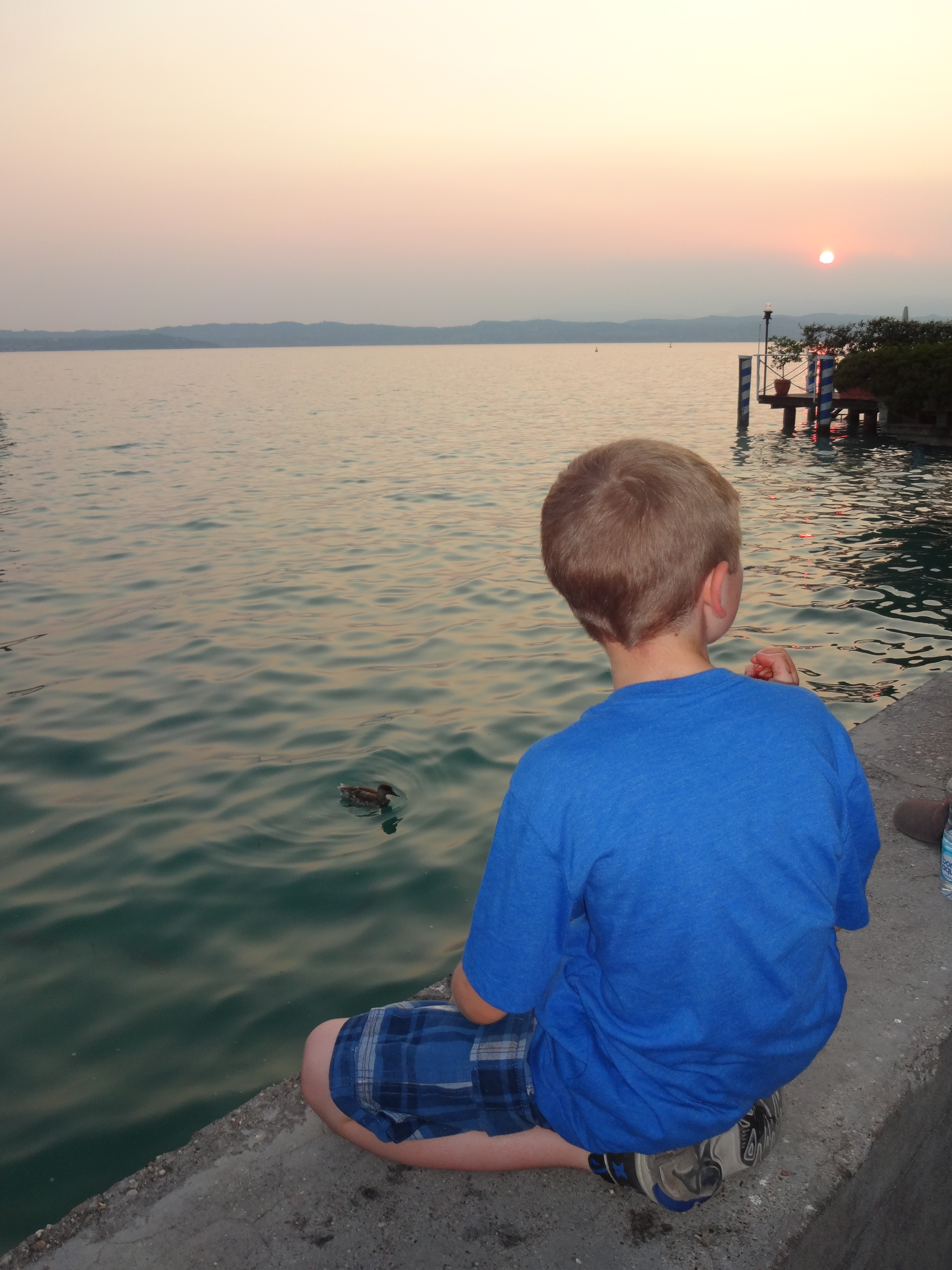
Enjoying the sunset and the aftermath of a sugar high from the ice cream)

The sun sets on a perfect day at Lake Garda!
We loved Lake Garda and would love to go back to explore other places around the lake! For anyone who has been there, are there any other locations on Lake Garda that you’d like to recommend?

The Austrian Alps!
We have often found that the best and most memorable part of a holiday isn’t the places you see, but the people you meet. On Wednesday morning we packed up and said our good-byes to our Airbnb hosts. It was our first time to use Airbnb, and we had a wonderful experience. Out of respect for our hosts’ privacy I won’t post photos or use their names. However, I want to describe our experience with them, because staying in their home made our time in Bavaria exceptional!
When we arrived Monday evening after getting lost on the Romantic Road, they greeted us like friends. They have a lovely home in a quiet, picturesque Bavarian village. We had our own private bedroom and bathroom. Every morning our host provided us with a breakfast feast that would rival anything you’d find in a four star hotel! Our hosts are an expat family living in Bavaria. They have three boys around Nate’s age. When we arrived home after our day trip to the Neuschwanstein Castle, Nate ran off with the boys to play in the backyard…on the trampoline and in the woods surrounding the house. We had a great time getting to know this wonderful family, and greatly appreciate their fantastic hospitality!
We left late on Wednesday morning for our next destination….Verona, Italy! We passed through the stunning Austrian Alps.

We stopped here to snap a few quick photos. Notice the camping photos at the bottom of the sign.

I want to camp here!
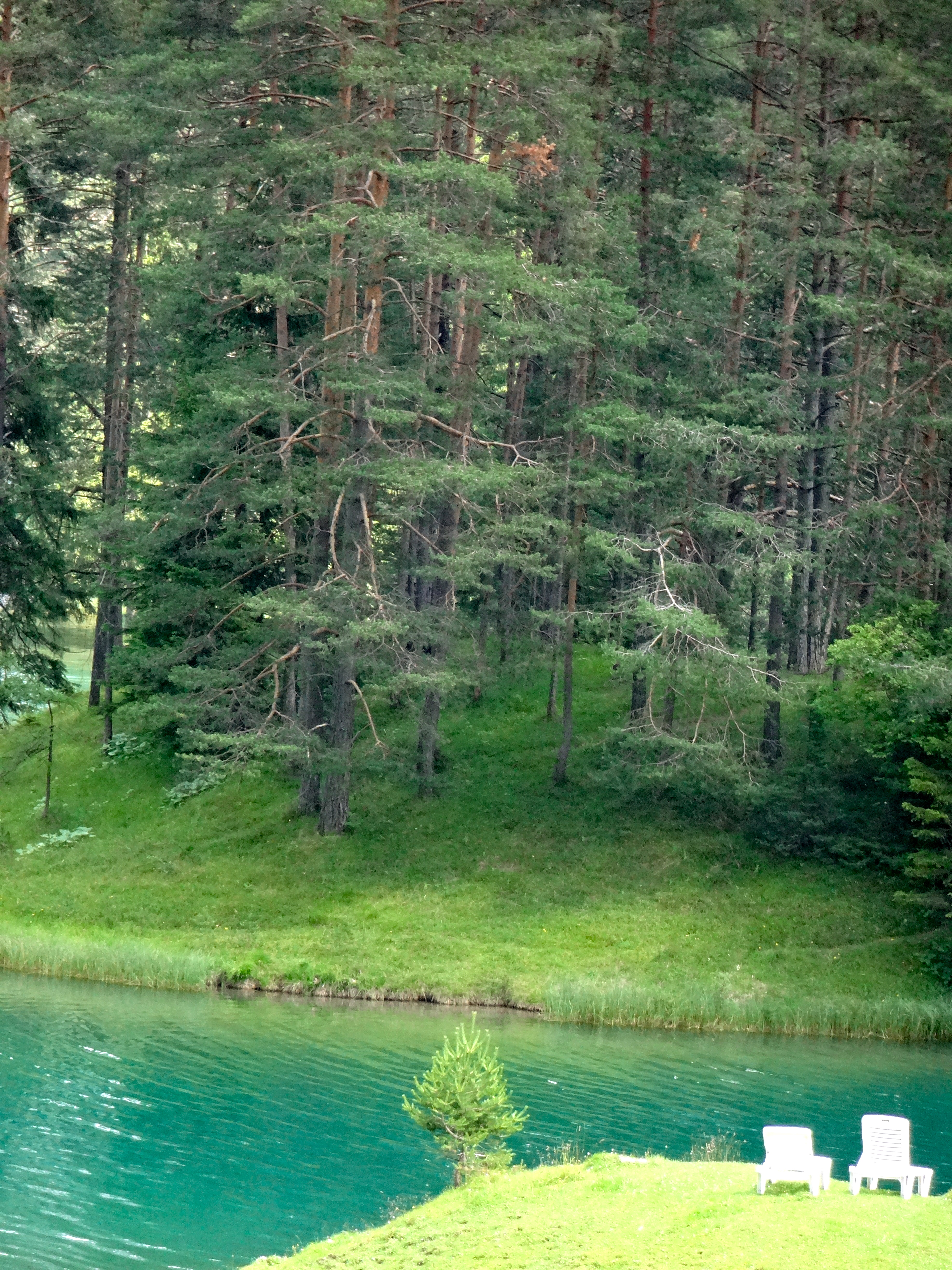
I call dibs on these chairs!

Not a bad way to get a little exercise before returning to the chairs.

See what you would miss if you just speed by in your car?

You could stop here for a bite to eat…but we didn’t.

Photos couldn’t capture the beauty of the Alps!
We drove past Innsbruck, Austria into the Piccole Dolomites…the mountain range located between the provinces of Trentino, Verona and Vicenza, in Northern Italy. They were beautiful; different from the Austrian Alps because there were many terraced vineyards. We didn’t stop for photos as we were ready to get to Verona.
So, now I’m writing from the roof top terrace of our flat on the outskirts of Verona, complete with a view of the river. Life is good!

The lovely town of Fussen!
After visiting Neuschwanstein Castle we headed to Fussen, the southern end of the Romantic Road.
Fussen began as a Roman trading fort. Its medieval town center is framed by the majestic Alps, rising above the the river Lech, and it is surrounded by lakes. It has a late-gothic castle, baroque cathedrals and the oldest preserved fresco in Bavaria.
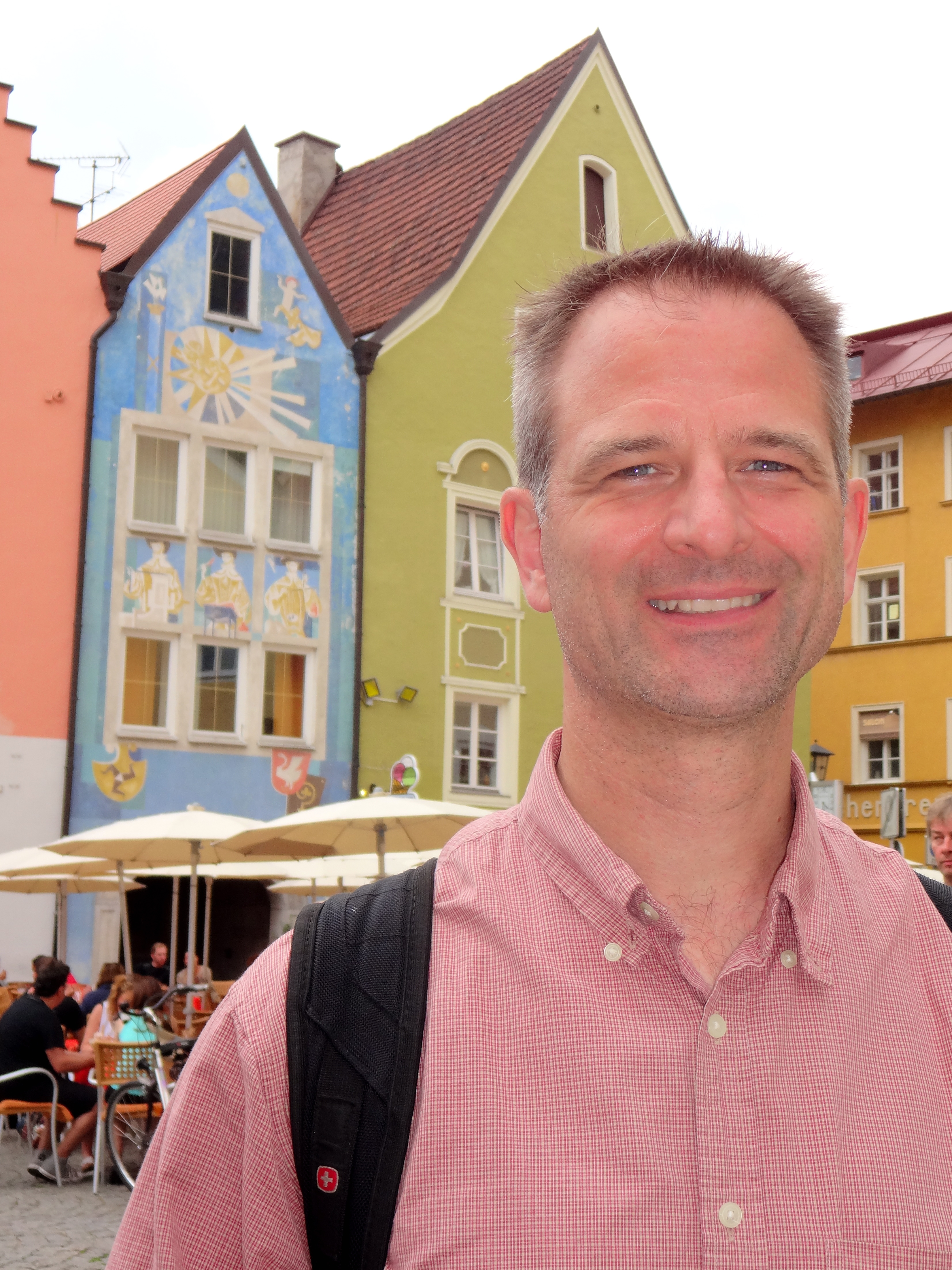
Watch for the close up in the next photo.

Many of the buildings have paintings on them.
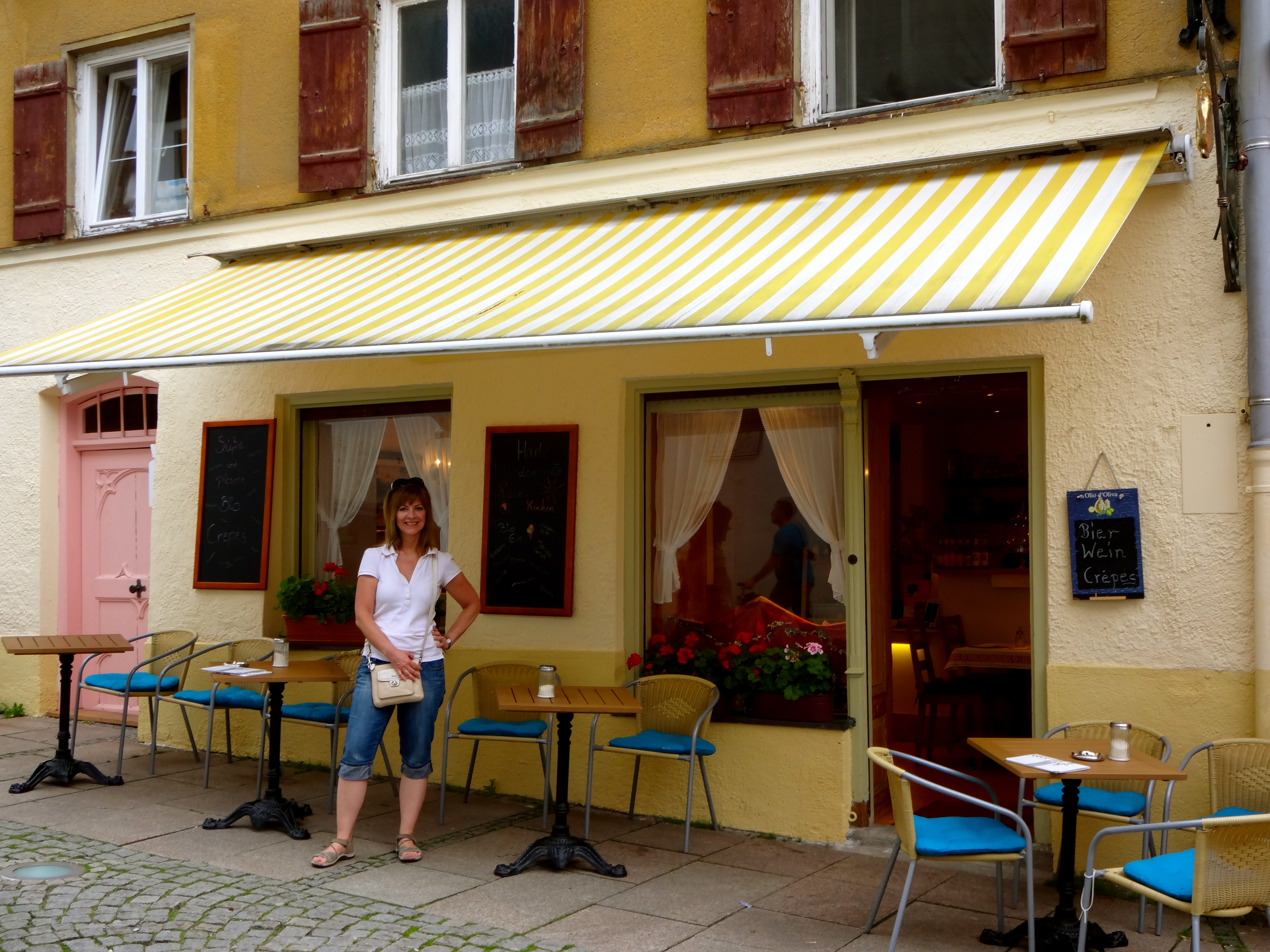
Cute cafes were everywhere!
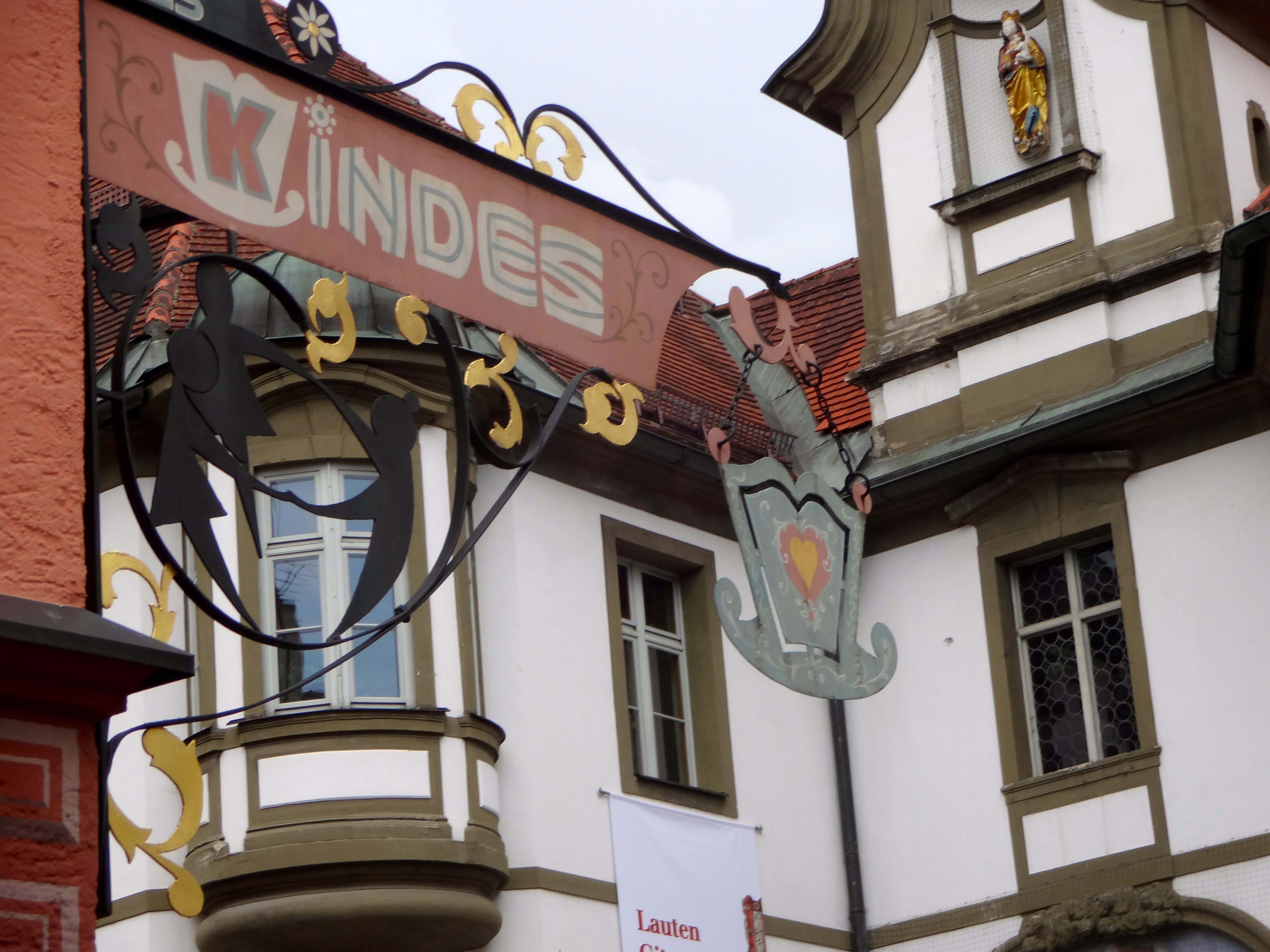
These wrought iron signs seem to be typical, too.

The town is immaculate!

Unfortunately, we didn’t have time to visit the castle.

This is another place we’d love to spend more time in.
Below is St. Mang’s Basilica. It has the oldest fresco in Germany in its crypt, dating back to 980.

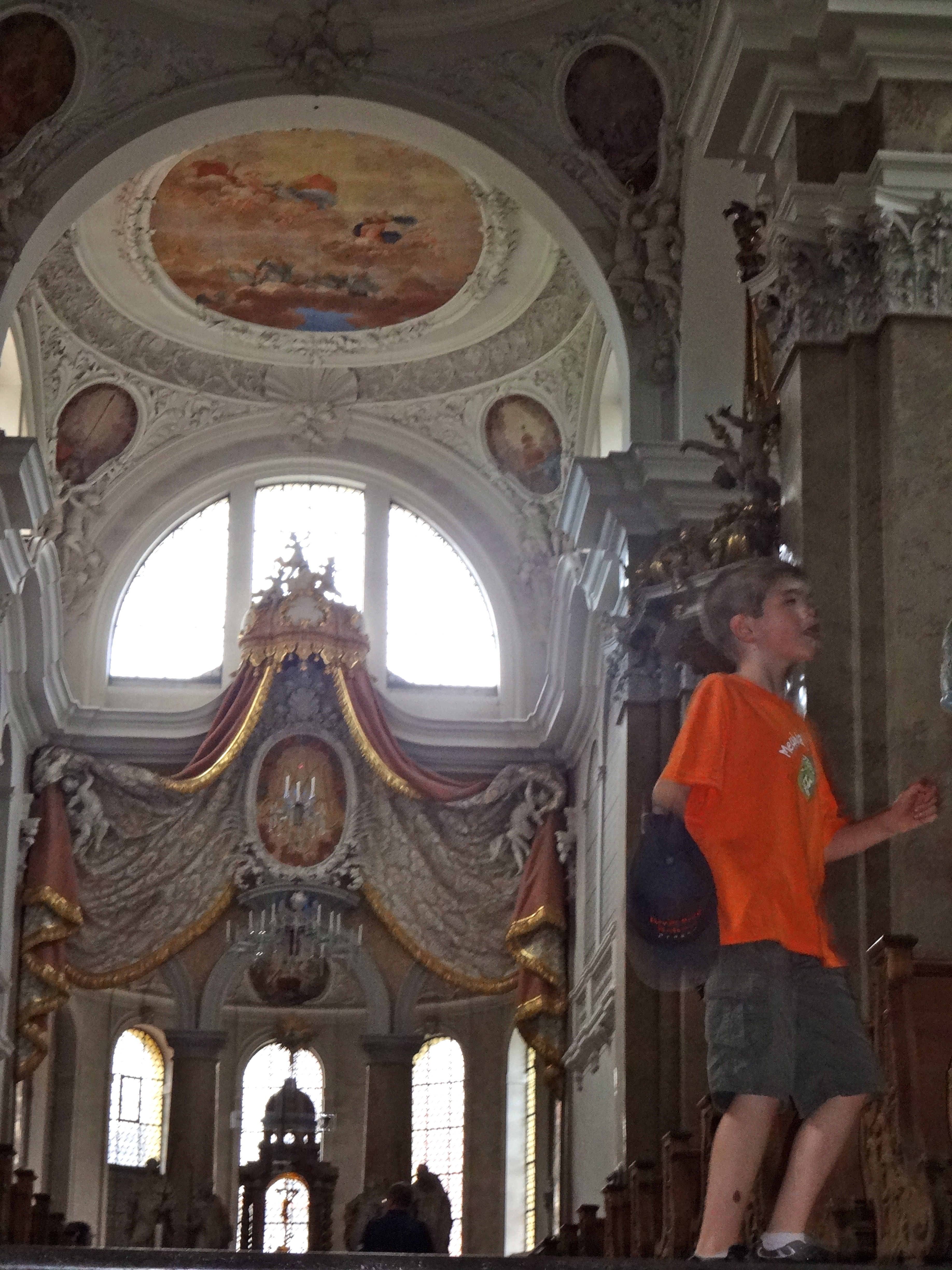
This church was beautiful! Kid in motion…
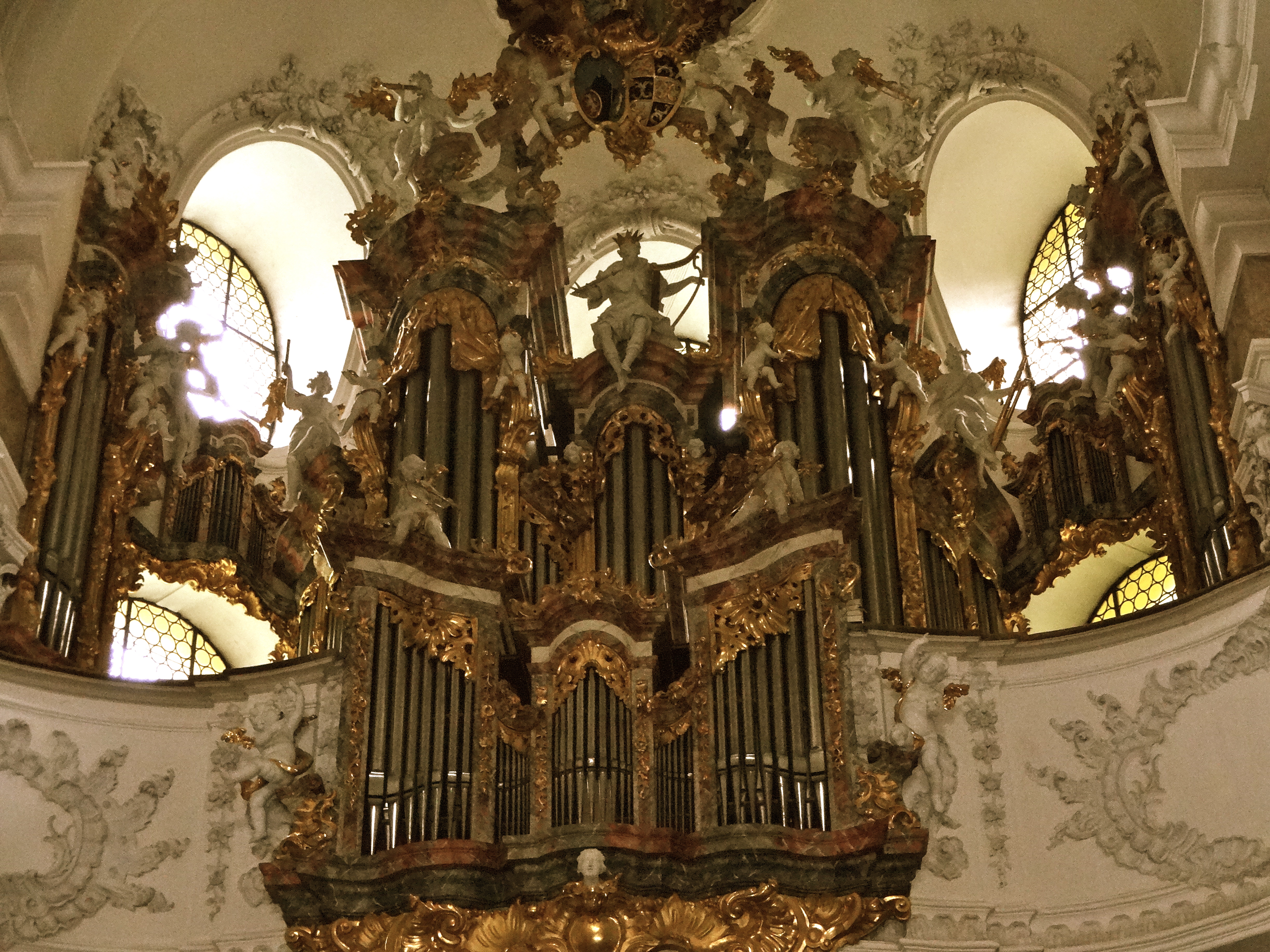
The organ!
We then drove back to the small Bavarian village we were staying in, and went for dinner at a local restaurant recommended by our Airbnb hosts. We tried authentic Bavarian dishes and the local beer. Our waitress was very friendly and we muddled through with our minimal German:)

The food was excellent!
The next day (yesterday) we left for Verona, Italy. We drove though spectacular Alpine scenery…past Innsbruck, Austria…into the Dolomites, and on to Verona.
Today we are doing a day trip to Lake Garda…gotta run!


 global nomad family